Navy SEAL who shot Osama bin Laden breaks silence on long-standing theory over what happened to his body

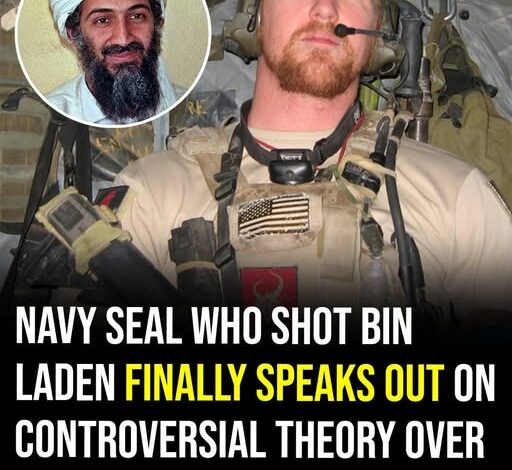
For many people, the raid in Abbottabad felt like the final page of a long and painful chapter.
Osama bin Laden was dead.
That was the message delivered to the world.
After years of fear, grief, war, intelligence work, and unanswered questions, the man behind one of the most devastating acts of terrorism in modern history had been found and killed. To some, the news brought relief. To others, it brought solemn reflection. For many families still carrying the wounds of September 11, it felt like justice had finally reached a man who had spent years beyond its grasp.
But almost immediately, the ending raised questions of its own.
The public was told that bin Laden’s body had been buried at sea. Officials explained that the decision was made quickly, citing religious considerations, security concerns, and the danger of creating a physical grave that could become a shrine. The explanation was practical, even strategic.
Yet it was also incomplete in the eyes of many.
There were no public photographs.
No open viewing.
No body shown to the world.
The most important evidence remained classified, and the official narrative was delivered with careful control.
In that silence, suspicion found room to grow.
Conspiracy theories spread almost as quickly as the news itself. Some claimed bin Laden had not been killed at all. Others suggested a body double had been used. Some imagined secret prisons, staged deaths, or hidden political motives behind the timing and secrecy of the announcement.
For those who trusted the government, the theories seemed absurd.
For those already inclined to doubt official accounts, the lack of visible proof felt like an invitation.
Robert O’Neill, the former Navy SEAL who has said he fired the fatal shots, has spent years pushing back against those doubts. He has defended the mission, the men involved, and the risks taken inside that compound. To him, the raid was real, dangerous, and final.
But even his own words reveal the unresolved tension surrounding that night.
O’Neill has insisted that he had no role in bin Laden’s burial. That part of the operation, he says, was not his responsibility. Yet his blunt admission that he would have preferred to see bin Laden’s body displayed from a New York bridge captures something raw beneath the official version of events.
It speaks to anger.
To grief.
To the human desire for proof that feels undeniable.
The raid ended bin Laden’s life, but it did not end the world’s hunger for certainty.
For some, an announcement was enough.
For others, only seeing would have meant believing.
And that is why the story still lingers.
Because history is not shaped only by what happens.
It is also shaped by what people are allowed to witness.
The mission may have closed one chapter, but the unanswered questions left behind ensured that the debate would continue long after the helicopters left Abbottabad.