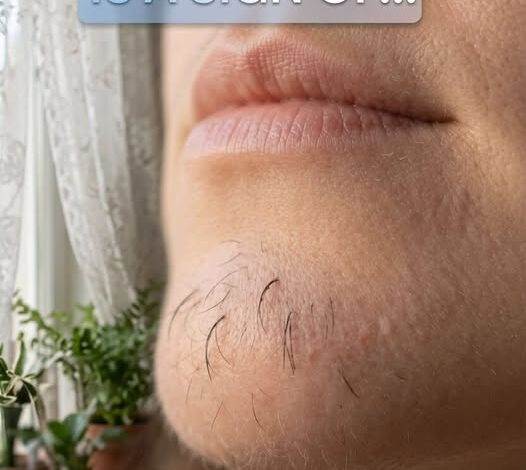
That stubborn chin hair may seem like a small cosmetic annoyance, but sometimes it can be the body’s way of hinting that something deeper is happening beneath the surface. Many women notice a few coarse hairs on the chin, upper lip, or jawline at some point in life, and in many cases, it is harmless. A single stray hair or a small patch that develops gradually may simply be related to genetics, aging, or normal hormonal shifts. But when the hair becomes thicker, darker, more frequent, or appears suddenly, it can be worth paying closer attention.
The reason often comes down to androgens. These are hormones commonly associated with male-pattern hair growth, but they are present in all women too. When androgen levels rise, or when hair follicles become more sensitive to them, hair may begin growing in areas where women do not typically expect it, such as the chin, jaw, chest, lower abdomen, or back. This type of hair growth can feel upsetting, not because a person is vain, but because it is visible, personal, and often tied to changes that feel outside of one’s control.
One of the most common medical causes is polycystic ovary syndrome, often called PCOS. PCOS can affect hormone balance and may lead to excess facial or body hair, irregular periods, acne, weight changes, oily skin, and sometimes thinning hair on the scalp. Not everyone with PCOS has the same symptoms, and some people may not realize the signs are connected. A few chin hairs alone do not automatically mean PCOS, but chin hair combined with menstrual changes, persistent acne, unexplained weight gain, or scalp thinning is a reason to speak with a healthcare professional.
Menopause and perimenopause can also change hair growth. As estrogen levels shift and decline, androgens may have a stronger visible effect, even if they are not dramatically elevated. This can lead to new coarse hairs on the chin or upper lip, along with other changes such as hot flashes, irregular cycles, sleep changes, or mood shifts. Genetics also plays a role. Some families naturally have more facial or body hair, and certain ethnic backgrounds may be more likely to have noticeable hair growth without it signaling illness.
Medications can sometimes contribute as well. Certain hormone treatments, steroids, some medications used for endometriosis, and other drugs may affect hair growth patterns. That is why it is important not to look at chin hair in isolation. The broader picture matters: when it started, how quickly it changed, where else hair is appearing, whether periods have changed, and whether other symptoms are present.
The pace of change is especially important. Hair growth that develops slowly over years is often less concerning than hair growth that appears suddenly or progresses quickly over weeks or months. New, rapid growth of coarse hair on the face, chest, lower abdomen, or back should be evaluated. So should missed or very irregular periods, deepening of the voice, sudden acne, increased muscle mass without explanation, or noticeable scalp hair loss. These symptoms may point to a more significant hormone imbalance and should not be ignored.
In rare cases, a sudden surge in androgen-related symptoms can be linked to a more serious condition involving the ovaries or adrenal glands. That does not mean every new chin hair is dangerous, but it does mean rapid changes deserve medical attention. If symptoms escalate quickly, especially with voice deepening, major menstrual changes, or fast-spreading hair growth, it is important to seek care promptly.
Treatment depends on the cause. A healthcare provider may ask about your menstrual cycle, family history, medications, weight changes, skin changes, and other symptoms. They may recommend blood tests to check hormone levels or evaluate for conditions such as PCOS, thyroid problems, adrenal concerns, or other causes. Once the reason is clearer, treatment might involve hormone-regulating medication, lifestyle changes, managing insulin resistance, adjusting a medication, or using treatments that slow unwanted hair growth.
There are also cosmetic options, and choosing them does not make anyone shallow. Tweezing, waxing, threading, shaving, depilatory creams, laser hair reduction, and electrolysis can all help manage unwanted hair, depending on skin type, hair type, budget, and personal preference. For many women, addressing the visible hair is part of feeling comfortable again, especially while the underlying hormonal issue is being evaluated or treated.
What matters most is not shame, but awareness. You are not overreacting for noticing changes in your face or body. You are not vain for wanting answers. The body often communicates through patterns, and new hair growth can be one of those signals. A few chin hairs may be normal, but chin hair paired with irregular periods, acne, scalp thinning, sudden changes, or other signs deserves attention.
Listening to your body is an act of care. With the right evaluation, you can find out whether the change is harmless, hormonal, or something that needs treatment. And with the right support, you can address both sides of the issue: the medical cause beneath the skin and the emotional discomfort that can come from feeling like your body is changing in ways you did not choose.