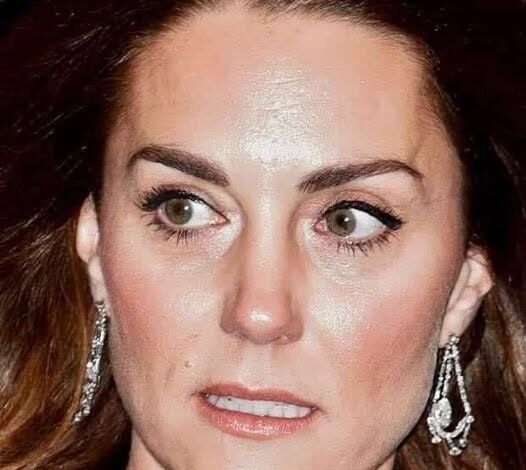
The fallout from that single edited image went far beyond a clumsy Photoshop mistake or a poorly handled family portrait. It became a moment that exposed the fragile relationship between the royal household, the media, and a public already primed to doubt official narratives. When major agencies such as the Associated Press, Reuters, Getty Images, and AFP collectively pulled the photo, they were not merely objecting to a few visible edits. They were making a much larger statement: Kensington Palace could no longer be treated, at least in that moment, as an unquestioned source of visual truth.
That was an extraordinary rebuke. Royal images have always been more than pictures. They are symbols of stability, continuity, family, duty, and reassurance. They are designed to calm speculation, not inflame it. Yet this photo had the opposite effect. Instead of quieting rumors about Catherine’s health and absence from public life, it intensified them. Every odd line, blurred sleeve, shifted hand, and visual inconsistency became evidence for a public already searching for answers.
In an era where trust in institutions is weakening and digital manipulation is easier than ever, the withdrawal of the image landed with global force. News agencies live by standards of authenticity. When they issued kill notices, they effectively told the world that the photograph could not be relied upon. For Kensington Palace, an institution built on carefully managed visibility, that was damaging in a way no ordinary correction could fully repair.
Kate’s apology came quickly and humbly. Signing the message simply with a “C,” she took responsibility for the confusion and said she had experimented with editing, as many amateur photographers do. The tone was personal, restrained, and almost painfully modest. It presented the incident as a human mistake rather than an institutional failure.
But many observers found that explanation difficult to separate from the broader palace machinery surrounding her. A public figure recovering from major surgery should not have been left alone to absorb the consequences of a communications breakdown. The photo was not posted into a private family group chat. It was released to the world at a time of intense speculation, through official channels, during one of the most sensitive periods in Kate’s public life. That made the stakes far higher than a casual editing error.
At the heart of the storm was not simply a princess, but a recovering mother trying to maintain a sense of normalcy under unbearable scrutiny. She had recently undergone major abdominal surgery, had disappeared from public view for medical reasons, and had become the subject of increasingly cruel rumors about her health, marriage, whereabouts, and condition. The public appetite for explanation had become relentless. Into that atmosphere came a family image meant to reassure, but it instead became a puzzle for strangers to dissect.
Experts and commentators argued that the palace should have handled the situation with greater transparency and professionalism. If the goal was to protect Kate, the strategy failed. Instead of giving her space to recover, the release placed her at the center of a digital investigation. It invited online sleuthing, intensified conspiracy theories, and turned an image of a mother with her children into a global forensic exercise.
That is what made the episode feel so uncomfortable. The public was not only analyzing a photograph. It was analyzing a woman’s body, absence, privacy, and credibility at a moment when she was physically vulnerable. The image became a battleground between institutional secrecy and public entitlement, between a family’s desire for control and a media environment that no longer accepts polished reassurance without proof.
When Kate later revealed her cancer diagnosis, the earlier frenzy took on a much harsher light. What had been treated by many as deception, evasion, or royal mismanagement suddenly looked more tragic and human. The world had been demanding certainty from someone who was privately facing fear, treatment, and the need to explain illness to her children. The edited photograph, however flawed, was no longer just a communications scandal. It became part of a painful story about a woman trying to appear well while her life had been quietly overturned.
That does not mean the palace’s handling of the situation should be excused entirely. Public institutions have responsibilities, especially when they release images to news organizations and ask the world to trust them. Transparency matters. Accuracy matters. Professional standards matter. But compassion matters too. The scandal revealed not only the palace’s communications failures, but also the cruelty of a public culture that can turn uncertainty into sport.
The photograph itself may have been flawed, but the emotions behind it were real. There was love in the image, even if the editing made it unreliable as a news photograph. There was also pressure: pressure to reassure, pressure to perform health, pressure to appear composed, pressure to provide proof of normal family life before the family itself was ready to explain what was happening.
In the end, the controversy was never only about Photoshop. It was about trust, illness, privacy, motherhood, media standards, and the impossible expectations placed on public women to be visible, flawless, and emotionally available even while suffering. The agencies were right to defend the integrity of their images. The public was right to expect honesty from official sources. But the human cost of the frenzy should not be forgotten.
Behind the edited photo was a woman trying to heal, a family trying to protect its children, and an institution struggling to manage a crisis with tools that no longer work as they once did. The picture may have failed as a piece of public communication, but it revealed something painfully true: even royalty cannot escape the pressure to look fine when life is anything but.


