Donald Trump’s warning that he would “take back Washington” if Janeese Lewis George wins has transformed what might have been a local primary into a national test of power, ideology, policing, and self-government. What began as a city race has become a symbolic battle over who gets to control the nation’s capital: the residents who live there, or the federal government that has always kept one hand on the city’s political throat.
For Lewis George’s supporters, her campaign represents a direct challenge to a system they believe has failed too many Washingtonians for too long. They see her as a bold reformer willing to confront federal overreach, aggressive policing, ICE cooperation, housing inequality, and the political caution that has shaped D.C. leadership for decades. To them, her rise is not a threat to the city, but a sign that residents are ready for a new model of governance rooted in affordability, racial justice, tenant protections, and local control.
Her critics see something very different. To them, Lewis George represents a dangerous experiment at a time when concerns about crime, disorder, and public safety remain central to the city’s political debate. Conservatives and some moderates argue that her approach would weaken enforcement, empower ideological activists, and make Washington less safe. They point to her record and rhetoric as evidence that she is too hostile to traditional policing and too willing to gamble with the security of residents, businesses, and visitors.
The fight has grown even more personal because of her own housing situation. Lewis George’s purchase of a $1.19 million single-family home has become a powerful symbol for opponents who accuse her of hypocrisy. They argue that she is personally benefiting from the kind of low-density, high-value neighborhood structure she wants to reshape through zoning reform and housing policy. To her defenders, the criticism is a distraction, reducing a broader affordability debate to one candidate’s address. To her opponents, it is proof that her politics ask others to accept changes she herself may be insulated from.
That dispute has turned housing into one of the sharpest fronts in the race. Lewis George’s push to overhaul low-density neighborhoods speaks to a larger argument over what Washington should become. Should the city protect the character of established residential areas, even if that means limiting new housing supply? Or should it force wealthier neighborhoods to absorb more density in the name of affordability, equity, and growth? Her candidacy places that question at the center of the campaign.
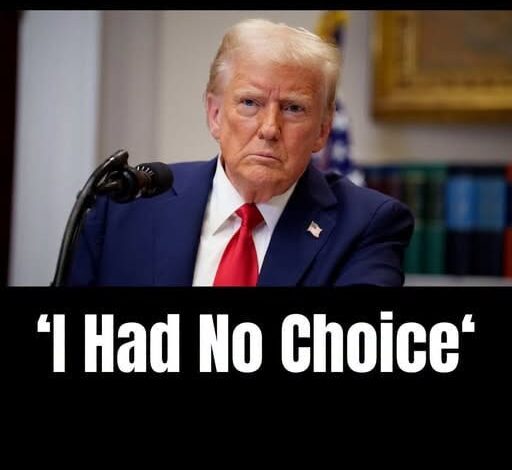
Trump’s intervention has only raised the stakes. By threatening federal action if Lewis George wins, he has reframed the race as a confrontation over Home Rule itself. Washington has long lived with an unusual political arrangement: a city with local leaders and local voters, but without the full autonomy enjoyed by states. Congress can still intervene in D.C. affairs, and the federal government has repeatedly used that authority as a political weapon. Trump’s remarks revive that tension in blunt terms, suggesting that if the city chooses a leader he opposes, federal power could be used to override or discipline it.
For conservatives, that possibility is not necessarily alarming. Some argue that because Washington is the seat of the federal government, it cannot be governed like any other city. They say crime, protests, policing, and public order in the capital carry national consequences, and that federal officials have a responsibility to step in if local leadership fails. In their view, a democratic socialist leading D.C. would not simply be a local matter; it would be a national risk.
For D.C. statehood advocates and Home Rule defenders, the threat confirms their deepest fears. They see it as another reminder that Washington’s residents remain politically vulnerable, their votes subject to interference whenever national politicians dislike the outcome. To them, the issue is not only whether Lewis George wins, but whether the city’s voters are allowed to make that choice without the looming threat of federal retaliation.
That is why the race now feels larger than one candidate or one primary. It has become a referendum on what kind of city Washington wants to be and how much power its residents truly have to decide. The debate touches nearly every fault line in urban politics: crime and punishment, housing and wealth, immigration enforcement and civil rights, local democracy and federal control.
As voters prepare to make their decision, the central question is no longer simply who should govern Washington. It is whether Washington will be permitted to govern itself when its choice conflicts with the politics of those in power nationally.
Lewis George’s candidacy has exposed a city caught between competing visions. One sees reform as necessary, even disruptive, because the old system has protected inequality and failed too many residents. The other sees her agenda as reckless, ideological, and dangerous for a capital already under pressure. Standing above both is Trump’s threat, turning a local election into a warning shot over the limits of D.C. democracy.
Whatever happens at the ballot box, the race has already revealed the fragility of Washington’s self-rule. In a city that represents American democracy to the world, the people who live there are still being forced to ask whether their own democracy can survive the choice they make.