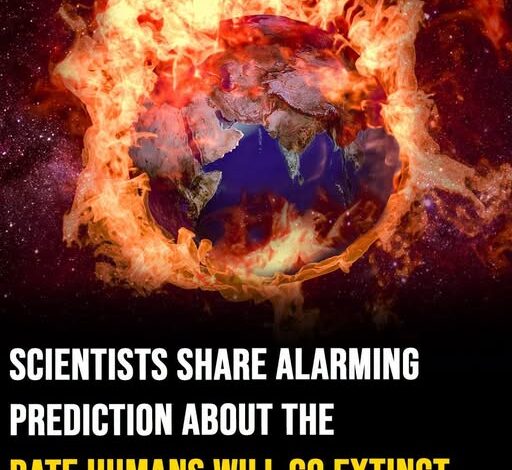
The latest move of the Doomsday Clock to 85 seconds before midnight is not a prophecy, and it is not a prediction of the exact moment civilization might collapse. It is something colder and more unsettling: a diagnosis of the world as it exists now.
The scientists and experts behind the clock are not trying to create panic for its own sake. Many of them come from fields defined by caution, evidence, and discipline, including nuclear physics, climate science, international security, arms control, and emerging technology policy. Their warning is not built on imagination, but on patterns they can already see. The message is clear: the dangers facing humanity are no longer distant, theoretical, or safely contained inside policy papers. They are active, overlapping, and accelerating.
War remains one of the most immediate threats. Nuclear-armed states are locked in dangerous rivalries, conflicts are spreading instability across regions, and diplomacy often seems weaker than the forces pushing nations toward escalation. The risk is not only that one leader might choose catastrophe, but that miscalculation, confusion, cyberattacks, or battlefield pressure could turn a crisis into something no one can fully control.
At the same time, environmental collapse is no longer a future warning. It is already visible in extreme heat, rising seas, stronger storms, droughts, wildfires, food insecurity, and communities forced to adapt faster than governments can respond. Climate change is not happening in isolation. It worsens instability, drives migration, strains resources, and increases the chance that already fragile regions will break under pressure.
Then there is the rise of powerful technologies, especially artificial intelligence, moving faster than regulation, ethics, or public understanding can keep up. AI has enormous potential to help humanity, but without guardrails it also carries serious risks: misinformation at scale, automated warfare, cyber disruption, surveillance, and decisions made by systems whose power may exceed the wisdom of those deploying them. When technologies this powerful spread through a world already marked by distrust and conflict, the danger multiplies.
That is what makes the current moment so frightening. These threats are not separate storms on different horizons. They are beginning to interact. War can weaken climate cooperation. Climate stress can fuel political instability. Artificial intelligence can amplify disinformation, speed up military decision-making, and make it harder for societies to agree on reality itself. The danger lies not only in each crisis, but in the way they can feed one another until events spiral beyond human control.
Still, the Doomsday Clock is meant to warn, not to condemn. Midnight is not inevitable. The hands of the clock have moved before, and they can move again. Each second represents choices still available to governments, institutions, and ordinary people. The clock is frightening precisely because it says there is still time, but not much.
Moving the hands back would require leadership that treats diplomacy as strength, not weakness. It would require nuclear powers to reduce risks instead of normalizing threats. It would require governments to take climate action seriously, not as a slogan, but as a survival strategy. It would require societies to demand accountability from industries and leaders shaping artificial intelligence and other powerful technologies. Ethical limits cannot be treated as optional afterthoughts when the tools being created may reshape war, truth, labor, privacy, and human decision-making itself.
The warning also belongs to the public. Citizens are not powerless spectators. Public pressure can force climate action, defend democratic institutions, demand transparency, reject reckless escalation, and insist that technology serve human life rather than endanger it. The future is not decided only in laboratories, war rooms, boardrooms, or summits. It is also shaped by what people accept, what they resist, and what they refuse to ignore.
The clock now stands terrifyingly close to midnight, and that closeness should disturb us. But it should not paralyze us. Fear, when faced honestly, can become responsibility. The point is not to stare helplessly at the clock, but to understand why it moved and what must change before it moves again.
The time remaining is frighteningly short.
But it is not yet zero.
And that means the next chapter is still unwritten, still unstable, and still uncomfortably in human hands.