Italian Prime Minister Giorgia Meloni has issued a firm response after comments attributed to former U.S. President Donald Trump drew attention in connection with their reported interaction during a G7 Summit in France. What might have otherwise been viewed as a brief diplomatic exchange quickly became a subject of political discussion after Trump’s remarks were reported by the Italian media outlet La7 and then circulated more widely through Italian and international coverage.
According to media reports about the interview, Trump suggested that Meloni had asked to take a photograph with him during the summit. His comments appeared to characterize the interaction in a way that some observers interpreted as dismissive or overly personal, especially given the formal setting of a major international gathering. The remarks spread quickly online and prompted debate over tone, diplomacy, and how political leaders describe one another in public.
Meloni responded publicly after the comments gained attention, rejecting the version of events that had been presented. In a social media post, she stated that the claims did not reflect reality and made clear that she did not recognize the account being circulated. Her response suggested frustration not only with the remarks themselves, but also with the way the situation had been framed in the media.
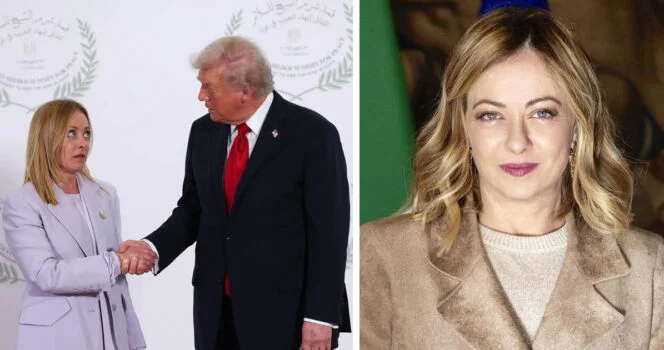
Her reaction centered on defending both her personal dignity and the institutional role she holds as Italy’s Prime Minister. Meloni emphasized that diplomatic relations are conducted with seriousness, respect, and proper protocol. By pushing back against the reported characterization, she appeared determined to make clear that her actions in an official international setting should not be reduced to a casual or undignified moment.
The exchange quickly became part of a broader conversation about how leaders communicate in public and how informal comments can take on larger political meaning. International summits such as the G7 are filled with meetings, greetings, photographs, and brief interactions between world leaders. These moments are often carefully managed, but once described afterward in interviews or political commentary, they can be interpreted in very different ways depending on context.
In this case, the disagreement was not about a major policy decision, but about the description of a brief personal interaction. Still, the reaction showed how even small remarks can become politically significant when they involve high-profile figures. For Meloni’s supporters, her response was seen as a necessary defense of her authority and image. For critics and commentators, the incident added another layer to the ongoing scrutiny surrounding relationships between prominent conservative leaders across different countries.
Italian political figures also reacted to the controversy. Reports indicated that Foreign Minister Antonio Tajani addressed the matter and expressed concern about the tone of the remarks attributed to Trump. The fact that other officials commented on the situation showed how quickly a media interview can influence diplomatic optics, even when the underlying relationship between two countries remains formally intact.
The broader relationship between Italy and the United States continues to rest on long-standing cooperation. Both nations are NATO allies and work together on security, trade, diplomacy, and international policy. However, political relationships between leaders can still experience tension, especially when public statements create controversy or are perceived as disrespectful.
Both Meloni and Trump remain highly visible figures in their respective political spheres. Their interactions attract attention not only because of their official roles, but also because both have been associated with influential right-leaning political movements. As a result, even a short remark involving either leader can quickly become part of a larger discussion about power, image, diplomacy, and political style.
The incident also highlights the speed of modern political communication. A comment made in an interview can move rapidly from television coverage to social media, then into international headlines. Once that happens, leaders are often forced to respond not only to the original statement, but also to the public interpretation that forms around it.
For now, the disagreement appears to remain a political controversy rather than a formal diplomatic crisis. Meloni has rejected the reported characterization, while Trump’s remarks continue to be discussed in media coverage and public commentary. The two sides have not appeared to escalate the matter into a broader institutional conflict.
Still, the episode serves as a reminder that in modern politics, perception can be almost as important as policy. A brief exchange at a major summit can quickly become a larger story when filtered through interviews, headlines, and social media reaction. What began as a reported comment about a photo became a debate about respect, leadership, and the way powerful figures speak about one another on the world stage.
Despite the controversy, Italy and the United States continue to maintain formal diplomatic ties and cooperation across key international issues. But the incident shows how easily political narratives can form around even the smallest moments — and how quickly leaders may feel compelled to defend their credibility when those moments are publicly disputed.