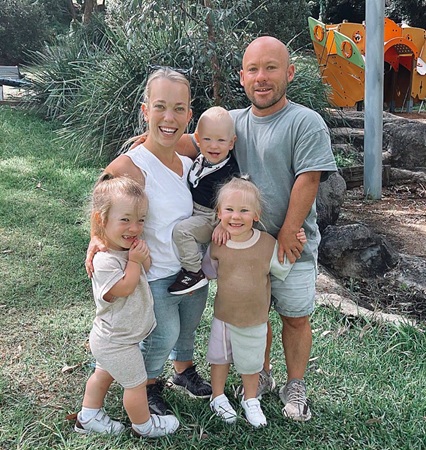
Many married couples are familiar with being asked when they plan to have children, but for Charli Worgan and her husband Cullen, the questions they often faced were very different. Instead of simple curiosity, they frequently encountered intrusive comments about why they chose to become parents at all. Because both Charli and Cullen live with different forms of dwarfism, their relationship, pregnancies, and family life have often been met with public attention, misunderstanding, and judgment from people who do not know them personally.
Living in Sydney, Australia, the couple has spent years navigating a world that sometimes treats visible difference as an invitation for strangers to ask deeply personal questions. Charli and Cullen both have distinct genetic conditions that affect their height, and because of this, their decision to start a family naturally attracted interest. Some of that interest came from people who genuinely wanted to learn. But at other times, it came in the form of criticism, assumptions, and comments that reduced a loving family decision to a public debate.
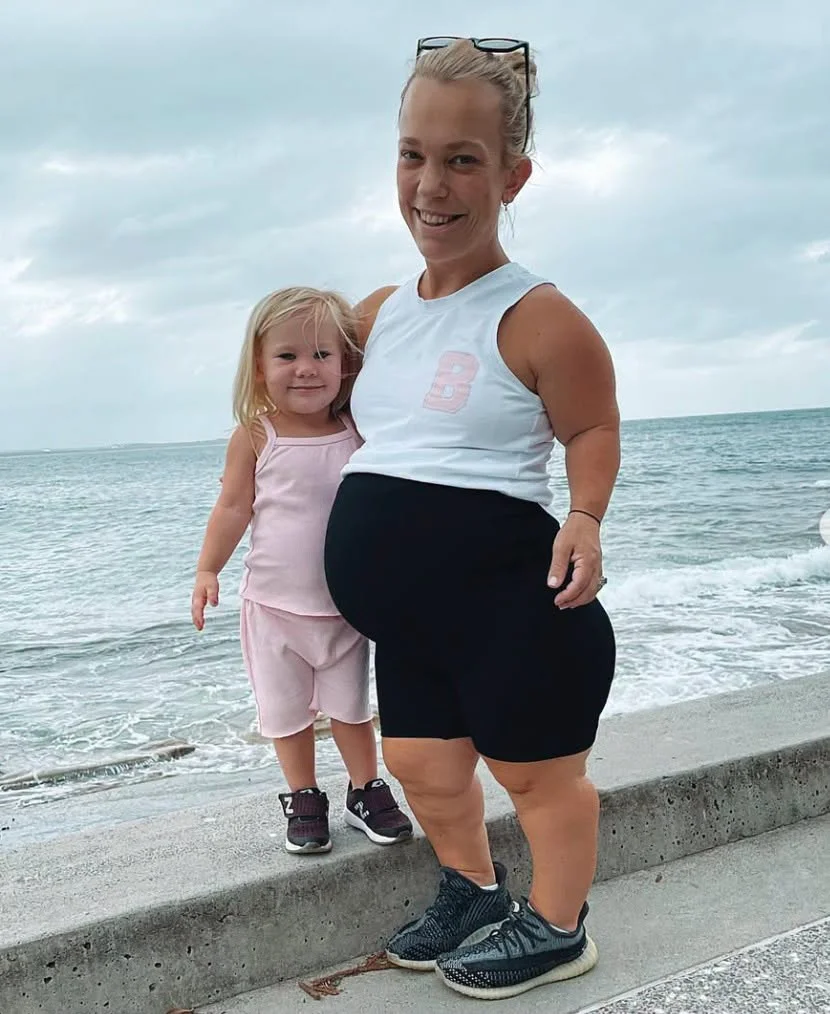
When Charli became pregnant with their first child, she began experiencing even more public commentary. Pregnancy is already an emotional time for many parents, filled with hope, fear, planning, and uncertainty. For Charli, those feelings were intensified by the knowledge that strangers were watching, judging, and questioning choices that were deeply private. Instead of simply being allowed to celebrate motherhood, she found herself having to explain her family, her body, and her medical reality to people who often spoke without understanding.
After the birth of their first daughter, Charli decided to create a social media account to document their journey as a family. Her original goal was not fame. She wanted to offer insight into what life was really like for parents with dwarfism, while also giving others a more honest and human view of genetic difference. Over time, her account grew far beyond what she expected, attracting a large following of people interested in her family’s day-to-day life, parenting experiences, and personal reflections.
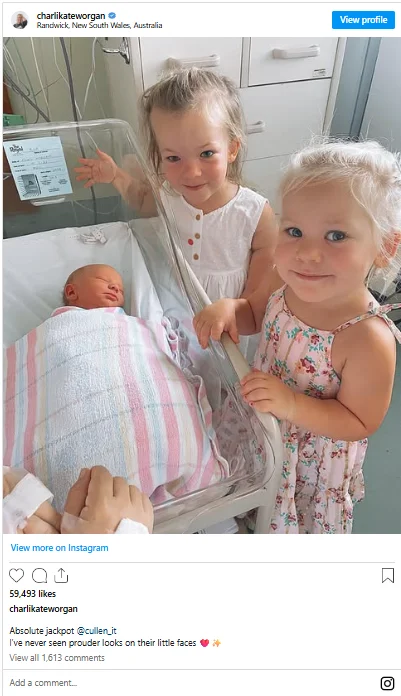
Today, Charli has built a strong online presence, with hundreds of thousands of followers on Instagram. Through her platform, she shares family milestones, ordinary parenting moments, honest updates, and reflections on the challenges they face. Her content has helped many people better understand that families do not all look the same, and that difference does not make a family less loving, capable, or complete.
As Charli and Cullen’s family grew, so did public interest in their story. The couple now has multiple children, and their experiences as parents continue to be a central part of Charli’s online presence. She often shares the joyful parts of motherhood, but she has also been honest about the more difficult and complicated aspects, especially when it comes to pregnancy and genetics.
When Charli announced her third pregnancy, she also opened up about the emotional and medical challenges involved. Because both parents have genetic conditions, each pregnancy carries several possible outcomes. This means that pregnancy for Charli is not only about counting down the weeks and preparing for a baby. It also involves careful medical monitoring, genetic testing, difficult waiting periods, and the emotional weight of not knowing what the results may bring.
One procedure Charli has discussed publicly is Chorionic Villus Sampling, often called CVS. This test analyzes genetic information from the placenta and is usually performed early in pregnancy. While it can provide important information, it also carries a small risk, which makes the experience emotionally and physically demanding. For Charli, testing is not just a medical appointment. It is a moment filled with fear, hope, uncertainty, and the need to prepare for several possible realities at once.
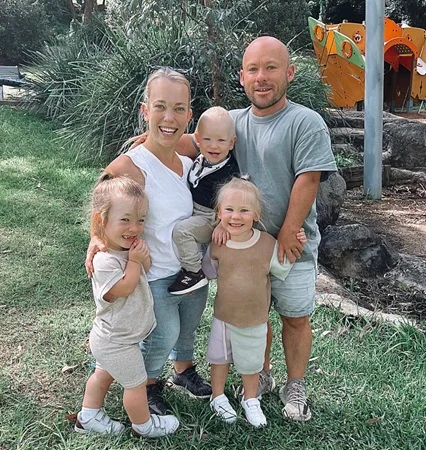
According to Charli’s public explanations, each pregnancy can result in different genetic possibilities. A child could be born with average height, inherit Charli’s form of dwarfism, inherit Cullen’s form of dwarfism, or, in rare and serious cases, inherit both genetic conditions. Medical professionals have explained that the combination of both conditions can be extremely severe and not compatible with long-term survival. That possibility makes each pregnancy emotionally complex in a way many people may not fully understand.
Charli has shared that while many expectant parents celebrate milestones such as reaching the 12-week mark, that stage can feel very different for her. Instead of only relief and excitement, it may bring medical procedures, genetic testing, and anxious waiting. This contrast highlights the unique reality of her pregnancies. Joy and fear exist side by side. Love for the baby is present from the beginning, but so is the awareness that the path forward may not be simple.
Through her public posts, Charli has worked to explain these genetic possibilities clearly and respectfully. By doing so, she has helped educate her audience about dwarfism, inheritance, pregnancy risks, and the emotional side of medical uncertainty. Her honesty gives followers a better understanding of what families like hers may face behind the photos and happy announcements. It also gives other parents in complex medical situations a sense that they are not alone.
Charli has also spoken openly about the criticism she receives online. Some people have questioned her decision to have children because of the risks involved. Others have made assumptions about disability, parenting, and quality of life without understanding the love, planning, and medical guidance behind her choices. In response, Charli has emphasized that her decisions are deeply personal and made with care, thought, and professional support. She has also encouraged people to approach conversations about parenting and genetic conditions with kindness rather than judgment.
Despite the challenges, Charli and Cullen have continued to build a loving and supportive family. Their children are growing up surrounded by care, openness, and resilience. Through their online presence, the family shares both ordinary and meaningful moments: birthdays, milestones, family outings, parenting struggles, and the small daily joys that make up real life. For many followers, that honesty is what makes their story so powerful.
Their youngest child, a son named Rip, was born in February, and Charli later shared reflections on motherhood after his arrival. In her message, she expressed gratitude for her family while also acknowledging that parenting is demanding, imperfect, and deeply personal. She reminded others that there is no single correct way to be a parent. Every family has its own circumstances, challenges, strengths, and ways of loving.
Through her social media presence, Charli Worgan has become a voice for openness about genetic diversity, disability, motherhood, and family resilience. Her platform does not present life as perfect. Instead, it shows a fuller picture: the medical appointments, the public judgment, the emotional strain, the joy of children, the strength of marriage, and the courage it takes to keep sharing when others misunderstand.
In conclusion, the story of Charli Worgan and Cullen reflects a parenting journey shaped by genetics, public attention, personal strength, and deep love. Their situation involves medical complexity and emotional challenges, but it also highlights the beauty of family life in all its different forms. Their openness continues to inspire conversations about acceptance, disability, parenting, and the importance of treating people’s choices with compassion.
At its heart, their story is not only about dwarfism or pregnancy risks. It is about a family choosing love despite uncertainty, choosing visibility despite criticism, and choosing to educate others while living their lives honestly. Charli and Cullen remind people that families do not need to fit one narrow image to be strong, worthy, and full of joy.