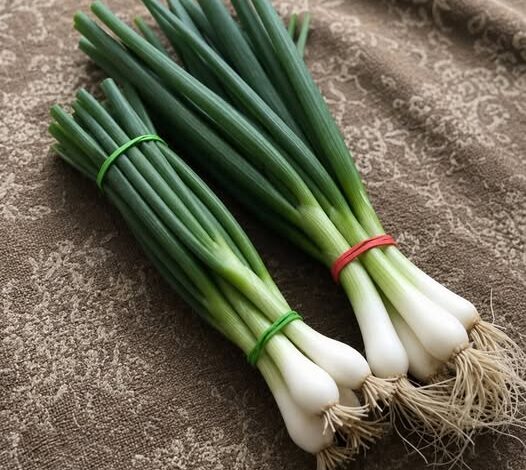
What began as a tense standoff over “wrong” onions slowly unraveled into something much more honest.
At first, it seemed ridiculous. We were standing in the kitchen, frustrated and defensive, arguing over something as small as a bunch of green onions. She had asked for scallions, and I had brought home what I thought was exactly that. To me, the difference seemed nonexistent. To her, it felt like I had ignored what she asked for.
That was the real spark.
Not the onions.
Not the recipe.
Not the grocery bag sitting on the counter.
The real issue was the feeling underneath it all.
She felt unheard. I felt unfairly blamed. She thought I had brushed off a simple request. I thought I had gone out of my way to help and was being criticized for it. Within minutes, what should have been a minor kitchen misunderstanding turned into a small but painful argument about attention, effort, and respect.
At first, we both wanted to be right.
I pulled out my phone and started researching, partly to prove my point. What I found was both comforting and humbling. In most places, green onions and scallions are essentially the same thing, with only subtle regional or culinary differences. Sometimes the terms are used interchangeably. Sometimes people use them differently depending on where they grew up, what their family called them, or what a recipe writer means.
Technically, I had not bought the wrong thing.
But emotionally, that did not mean she felt understood.
That realization changed the entire conversation.
Instead of continuing to argue, I asked her about the recipe. I asked what she meant when she said scallions, what her family called them when she was growing up, and why it mattered so much in that moment. At first, she was still guarded. Then she softened. She told me about watching her mother cook, about the words they used in her kitchen, and about how certain ingredients carried memories I had not considered.
Then she listened while I explained what I had learned. I showed her that, in most grocery stores and recipes, the two names often point to the same vegetable. I also admitted that I had been more focused on defending myself than understanding why she was upset.
That was when the tension finally began to loosen.
Side by side, we looked at the onions again. The white bottoms, the green tops, the fresh smell, the crisp texture. After all that, they were exactly what the recipe needed. The dish was not ruined. Dinner was not ruined. The evening did not have to be ruined either.
She apologized for snapping.
I accepted.
And I apologized too, not for buying the onions, but for turning the conversation into a courtroom instead of a moment to understand each other.
It was strange how quickly peace returned once we stopped trying to win. The kitchen felt lighter. The onions went into the recipe. We laughed, a little embarrassed, at how seriously we had both been taking it.
Now, we call it “the onion fight.”
It has become one of those stories we tell with a smile, not because it was funny in the moment, but because it taught us something we needed to learn. We double-check words now. If one of us asks for something specific, the other asks what they mean before assuming. We have learned that sometimes people can use different names for the same thing and still both be telling the truth.
More importantly, we learned how fragile everyday peace can be.
Most conflicts do not begin with something huge. They begin with a tone. A tired sigh. A misunderstood word. A feeling of being dismissed. A small disappointment that lands on top of a long day. Before either person realizes it, the argument is no longer about onions or groceries or dinner. It is about whether we feel seen.
That day reminded us that being right is not always the same as being kind. Facts matter, but so do feelings. Sometimes the most loving thing is not proving the definition, but asking why the word matters.
In the end, the onions worked perfectly.
So did the conversation, once we finally let it become honest.
And now, whenever we see green onions or scallions at the store, we smile. Not because the difference matters so much, but because we remember that even the smallest misunderstanding can become a chance to choose patience, curiosity, and care.
Most conflicts start small.
Thankfully, they can end kindly too, if we let them.