Donald Trump’s niece Mary reveals what ‘terrifies’ him most and claims he’s in a ‘downward spiral’

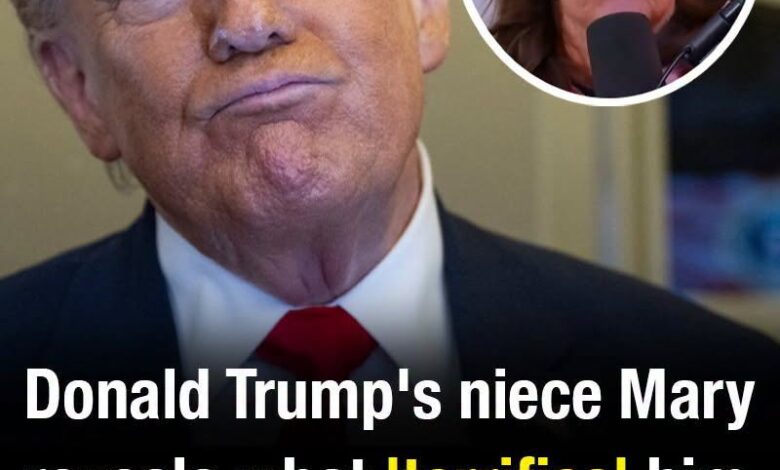
Mary Trump’s description of her uncle reads as more than a family dispute. It sounds like a warning from someone who believes she understands the machinery behind the image.
She portrays Donald Trump as a man trapped inside his own ego, wounded again and again by what she calls “constant narcissistic injuries.” In her view, the real threat to him is not simply political defeat, criticism, or opposition. It is humiliation. Public embarrassment, awkward appearances, confused statements, and moments that suggest weakness are, she argues, the things that cut him most deeply.
Every stumble becomes more than a mistake.
Every uncomfortable public moment becomes more than bad optics.
To Mary Trump, these incidents strike at the center of what her uncle cannot tolerate: the possibility that others may see him as vulnerable, diminished, or small.
The response from Trump’s allies was immediate and harsh. They dismissed her claims as bitter, dishonest, and attention-seeking, pointing instead to favorable health assessments and cognitive test results as proof that concerns about him are exaggerated or politically motivated.
But Mary’s comments continue to attract attention because they do not sound like ordinary partisan criticism. They come from inside the family, from someone who frames her argument not only around politics, but around personality, upbringing, and emotional damage.
That is what makes her portrait so unsettling.
She is not merely saying that Donald Trump is controversial, combative, or difficult. She is suggesting that beneath the confidence, insults, and constant declarations of strength is a man driven by fear: fear of ridicule, fear of exposure, fear of being seen as weak.
In the end, her argument is stark.
The man who has spent years presenting himself as a symbol of dominance and American strength may, behind the bluster, be most haunted by the possibility of appearing powerless.
And to Mary Trump, that fear is not just personal.
It is political.
Because when a leader’s deepest insecurity becomes part of how he responds to the world, the consequences reach far beyond one family.