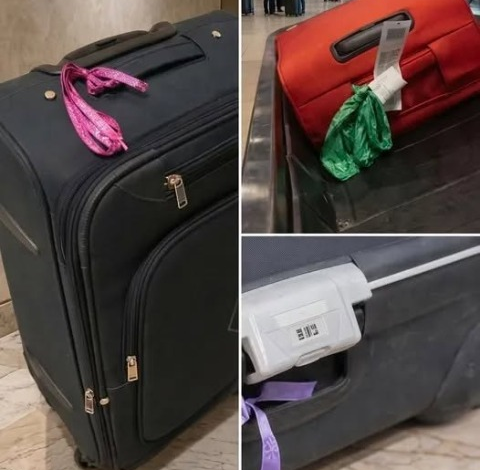
After a long trip, few airport moments feel more tiring than waiting at the baggage carousel and trying to pick out your suitcase from a crowd of similar-looking bags. Black, navy, gray, and dark green luggage can all start to look the same after hours of travel, especially when dozens of passengers are gathered around the same conveyor belt.
Because of that, many travelers try to make their bags stand out by tying on bright ribbons, scarves, colorful strings, or decorative luggage tags. At first, this seems like a clever idea. A bold ribbon or unique attachment can help you recognize your suitcase quickly and avoid accidentally grabbing someone else’s bag.
However, baggage handlers warn that this common travel habit can sometimes cause problems behind the scenes.
Most large airports use automated baggage systems to move luggage through check-in, screening, sorting, and loading. These systems depend on conveyor belts, scanners, and barcode readers to identify where each suitcase needs to go. When everything works smoothly, bags are routed quickly and efficiently to the correct flight.
But extra items attached to luggage can interfere with that process.
Loose ribbons, long straps, dangling decorations, and oversized accessories may get caught in conveyor belts or block barcode scanners from reading the baggage tag properly. If the system cannot scan the tag, the bag may be pulled aside and handled manually. That can slow things down and may increase the risk of your suitcase being delayed or placed on the wrong route.
Another issue travelers often forget about is old airline stickers and baggage labels. Many people leave past trip tags on their suitcases without thinking much about them. Over time, those old barcodes and labels can build up. While they may seem harmless, they can confuse automated sorting systems if a scanner picks up outdated information.
Before checking a bag, it is smart to remove old luggage tags, barcode stickers, and airline labels from previous flights. Keeping only the current baggage tag visible gives airport systems a clearer chance of sending your suitcase where it needs to go.
Baggage experts also mention that some packed foods can draw extra attention during screening. Dense items such as marzipan, certain sweets, or tightly packed foods may look unusual on X-ray machines. These foods are usually allowed, but they can sometimes lead to extra inspection, which may slow the process.
The good news is that you can still make your luggage easy to identify without adding anything that might get caught or confuse airport equipment. Instead of tying ribbons or loose accessories to your suitcase, choose luggage in a distinctive color, pattern, or texture. A suitcase with a bold design, unusual shade, or built-in identifying feature can stand out naturally without creating extra risk.
You can also use a flat, secure luggage tag with your contact information, as long as it does not hang loosely or cover the airline barcode. Some travelers add a small sticker or permanent mark in a safe spot on the suitcase, away from the baggage label area, to make recognition easier.
Another simple tip from baggage handlers is to place checked luggage on the conveyor belt with the wheels facing upward when possible. This may help reduce the chance of the wheels catching or being damaged during handling.
In the end, the goal is to make your bag recognizable without making it harder for airport systems to process. Removing old labels, avoiding loose ribbons, using secure identification, and choosing a distinctive suitcase can all help your luggage move more smoothly from check-in to arrival.
A small change in how you prepare your bag can make a big difference when it comes to avoiding delays, confusion, and unnecessary baggage problems.