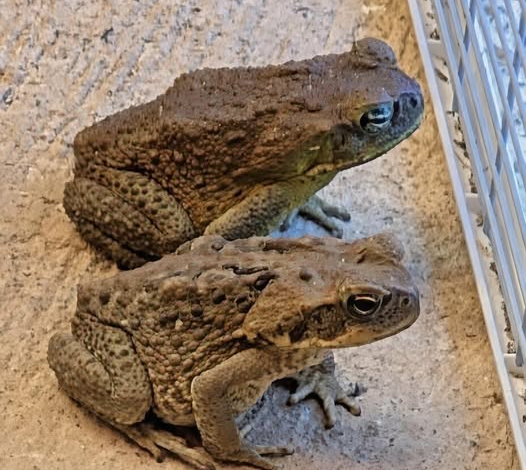
Did you know that toads may come near your house when the environment around you changes in subtle but powerful ways? Their appearance often feels surprising, especially when one suddenly shows up on a porch, beside a doorway, in a garden, or near an outdoor light. Some people may wonder if it means something mysterious or symbolic, but in most cases, a toad’s visit is not about superstition at all. It is usually a simple response to the conditions it needs to survive.
Toads are highly sensitive to their surroundings. They depend on moisture, mild temperatures, shelter, and a steady food supply. Because of this, they are often seen after rain, during humid evenings, or in places where the ground stays cool and damp. A yard with shaded corners, mulch, wet soil, fallen leaves, garden beds, or small water sources can become an inviting temporary habitat. Even something as ordinary as a porch light can play a role. Outdoor lights attract insects, and insects attract hungry toads. What looks like a random visit is often part of a natural chain reaction happening quietly around your home.
When a toad appears near your house, it may be following the signs of a comfortable micro-environment. Moisture softens the ground, insects become more active, and shaded spaces offer protection from heat and predators. Gardens, flowerbeds, and patios can unintentionally create the perfect combination of food, cover, and humidity. To the toad, your home is not a human space in the way we understand it. It is simply part of the larger landscape, and if that landscape provides what it needs, the toad may return again and again.
For centuries, folklore has connected toads with omens, luck, transformation, or hidden messages. In some cultures, they were seen as mysterious creatures because they seemed to appear suddenly after rain or at night. But science gives a much more grounded explanation. Toads are responding to environmental balance. Their movements are shaped by weather, temperature, food availability, and safe shelter. They go where survival is easiest.
Far from being harmful, toads are often helpful visitors. They eat many insects, including mosquitoes, beetles, flies, ants, and other small pests that people often try to control in their yards. This makes them natural pest managers. Gardeners frequently appreciate toads because their presence can support a healthier outdoor space without chemicals or traps. A toad in the garden can be a quiet sign that the area is alive, active, and balanced.
Their repeated visits may seem meaningful over time, especially if they appear in the same area again and again. But this usually means your yard consistently offers the conditions they prefer. Damp soil, thick plants, insects, and places to hide can turn an ordinary yard into a safe resting and feeding area. In that sense, a toad near your home can reveal something important about your environment: nature is finding a way to share the space with you.
Rather than fearing them or seeing them as strange, it helps to understand toads as small indicators of the living world around us. Their presence shows how connected everything is. Rain changes the soil. Moisture brings insects. Insects bring toads. Shelter keeps them safe. A simple backyard can become part of a much larger ecological system without us even noticing.
So when a toad appears near your house, it is not a curse, a warning, or something to chase away. It is a small creature responding to the rhythms of weather, food, and habitat. Its visit is a reminder that our homes are never completely separate from nature. Even in the most ordinary spaces, life is moving, adapting, and finding balance. A toad at your doorstep may simply be nature’s quiet way of showing that the environment around you is alive and changing.