Two Countries Introduce New Travel Restrictions for U.S. Citizens, Prompting Questions About International Travel and Diplomatic Relations

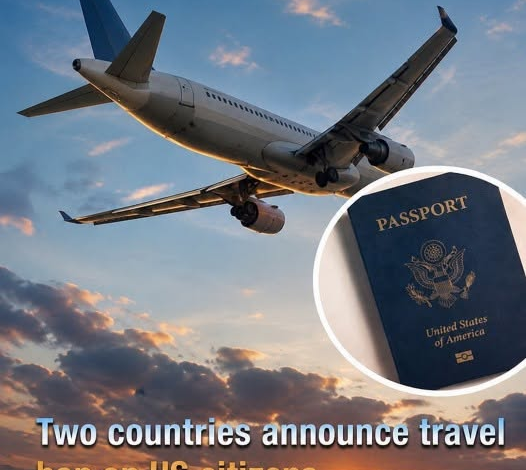
Immigration and border security have once again become major priorities for President Donald Trump’s administration. Since returning to office, Trump has emphasized stricter entry requirements and stronger enforcement measures, arguing that they are necessary to protect national security and maintain the integrity of the country’s borders. Earlier this month, the White House announced a significant expansion of travel restrictions, adding more nations to an already extensive list of countries facing full or partial limits on entry into the United States. With 39 countries now affected, the policy represents one of the largest travel restriction programs implemented in recent years. Supporters view the move as a way to encourage foreign governments to improve security cooperation, while critics worry about its broader impact on international relations, travel, and economic activity.
Under the updated policy, citizens from several countries, including Afghanistan, Haiti, Iran, Libya, Somalia, Sudan, Syria, and Yemen, face comprehensive travel restrictions with only limited exceptions. Other nations, such as Angola, Nigeria, Tanzania, and Zambia, are subject to partial restrictions that affect certain visa categories rather than imposing complete bans. U.S. officials say these decisions are based on factors such as document security, information-sharing practices, and compliance with American immigration standards. However, some foreign governments and advocacy organizations have questioned how these evaluations are conducted, calling for greater transparency regarding the criteria used to determine which countries are included.
The expanded restrictions have already influenced diplomatic relations beyond U.S. borders. Several countries have responded with measures of their own. Mali and Burkina Faso announced reciprocal restrictions affecting American travelers, citing principles of fairness and national sovereignty. Niger has reportedly gone a step further by implementing a long-term suspension of visa issuance for U.S. citizens, while Chad previously introduced similar limitations. These developments could create additional challenges for tourists, business travelers, journalists, aid workers, and organizations that operate internationally. As governments react to one another’s policies, travelers may face a more complex and less predictable global landscape than in previous years.
At the same time, the administration has introduced enhanced biometric screening procedures at U.S. airports. These measures include expanded facial recognition technology and the potential collection of additional identification data for certain non-citizens. Officials say the goal is to strengthen border security and improve identity verification, while privacy advocates continue to raise questions about data storage, oversight, and long-term use of collected information. Meanwhile, several European governments, including the United Kingdom and Germany, have reminded their citizens that visas or ESTA approvals do not automatically guarantee entry into the United States. With reports suggesting that additional countries could be added to the list in the future, the evolving policies are drawing attention worldwide. Whether viewed as a security initiative or a significant shift in travel policy, these changes are likely to influence international mobility, diplomacy, and global travel decisions for years to come.