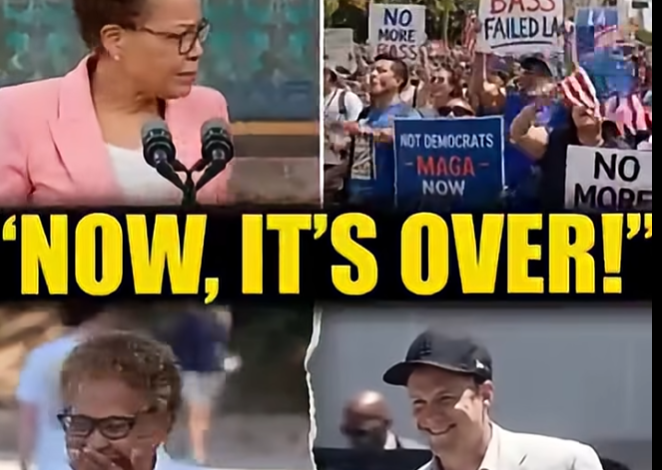
Trump’s blistering posts accusing “Dumocrats” of trying to “steal” California’s primary races tapped into a deep reservoir of frustration that existed long before this particular election cycle. For many voters, the anger is not only about one candidate, one race, or one delayed result. It is about a system that feels too slow, too complicated, and too difficult for ordinary people to watch with confidence.
As days stretch into weeks, mail-in ballots continue to arrive, signatures are verified, and county officials work through the long process of counting votes under California’s election rules. To election administrators, this is the normal machinery of a state that prioritizes broad ballot access, mailed voting, and time for voters to correct certain ballot issues. To critics, however, the process looks less like diligence and more like drift — a prolonged uncertainty that leaves too much room for suspicion to grow.
That suspicion becomes especially intense when early results appear to tell one story, only for later ballot batches to reshape the race. Candidates who seemed stalled or defeated can suddenly gain ground as additional mail ballots are processed. Progressive figures such as Nithya Raman have become part of that broader debate, with late-counted ballots fueling accusations from Trump-aligned voices that the outcome is being managed rather than merely measured.
Those accusations remain disputed, and major reports have noted that Trump has not provided evidence proving that California Democrats are stealing the contests. Election officials and analysts have pointed instead to familiar patterns in California voting: large numbers of mail ballots, ballots postmarked by Election Day but received afterward, signature verification, and the fact that different types of ballots can favor different candidates. These explanations may be legally and procedurally sound, but they do not automatically satisfy voters who are watching the count unfold in slow motion.
That gap between official explanation and public perception is where the crisis deepens. Newsom’s office and California election officials argue that the delays are the product of laws designed to expand access, protect voters, and ensure that ballots are verified before being counted. In their view, a slower count is not evidence of corruption; it is the price of a system built around participation and procedural safeguards.
Critics see something different. They argue that a system this slow, this opaque to casual observers, and this prone to dramatic late shifts is inherently corrosive, regardless of whether outright fraud is ever proven. Their concern is not only that results change, but that they change in ways many voters do not understand. When explanations arrive after suspicion has already hardened, official reassurance can sound less like transparency and more like damage control.
The role of prediction markets, social media, and real-time political commentary has only intensified the problem. As odds swing wildly and partial results are interpreted as though they were final, every new batch of ballots becomes another flashpoint. A normal update can look like a reversal. A legal counting window can look like manipulation. A slow administrative process can become, in the eyes of angry voters, evidence of a hidden political design.
That does not make the fraud claims true. But it does reveal a serious weakness in public trust.
A democracy depends not only on accurate counting, but on the public’s ability to believe that the count is being conducted fairly. If millions of voters see the system as a black box, then even legitimate results can emerge damaged. The danger is not limited to California, and it does not belong to one party alone. Any election process that produces prolonged uncertainty without clear, accessible explanation risks becoming vulnerable to conspiracy, outrage, and political exploitation.
California’s defenders argue that the answer is patience. Critics argue that patience is no longer enough. They want faster reporting, clearer ballot-tracking procedures, stronger public communication, and more transparency about how late-arriving and late-counted ballots affect the totals. Without those reforms, they say, every close race will invite the same cycle: early leads, delayed counts, late shifts, accusations, denials, and a final result that a large share of the public refuses to accept.
The deeper issue is not simply whether one primary was stolen. It is whether the system can prove, convincingly and repeatedly, that it was not. In an atmosphere already poisoned by mistrust, officials cannot rely on legal correctness alone. They must also confront the reality of perception. A process may be lawful and still look suspicious to people who do not understand it. A result may be accurate and still lose legitimacy if the path to it feels hidden.
Trump’s posts turned that distrust into a political weapon, but the raw material was already there: slow counts, shifting margins, partisan expectations, and a public primed to see delay as deception. Whether one views his claims as a necessary warning or an irresponsible attack, the reaction shows how fragile confidence in elections has become.
The real crisis, then, is larger than one candidate’s surge or one president’s accusation. It is the widening distance between the official count and public belief. When voters stop trusting the process, every ballot update becomes suspicious, every explanation sounds partisan, and every defeat becomes easier to reject.
California may ultimately certify results that withstand legal scrutiny. But the damage is already visible. Millions of people are not simply waiting to see who won. They are wondering whether they will believe the answer.