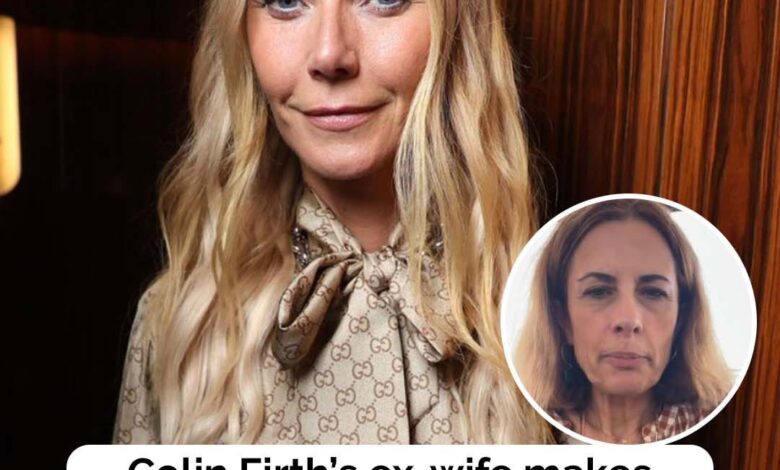
Livia Giuggioli’s fury cuts through the usual celebrity noise because it does not read like gossip. It reads like conscience colliding with commerce.
In a culture where celebrity scandals often dissolve into image management, publicists’ statements, and a few days of online outrage, Giuggioli’s response landed differently. Her anger was not centered on vanity, rivalry, or a careless remark at a party. It was aimed at something larger: the way luxury can glide past suffering as if suffering were simply bad lighting, an inconvenient backdrop to be cropped out of the frame.
The controversy began with Gwyneth Paltrow’s appearance in a polished promotional campaign for a luxury residential development in Israel. The ad, by design, sold aspiration. It offered serenity, elegance, movement, wellness, architecture, and the familiar language of elite escape. It presented a world where everything is curated, softened, and made beautiful enough to desire.
But to Giuggioli and many of Paltrow’s critics, that beauty was precisely the problem.
They saw the campaign not as a harmless real-estate advertisement, but as a pristine marketing fantasy unfolding against the backdrop of war, displacement, grief, and global outrage. In that context, the images of comfort and exclusivity did not feel neutral. They felt jarring. To some, they appeared morally detached, a luxury dream sold while families elsewhere were mourning, fleeing, or trying to survive.
Giuggioli’s reaction was sharp because she treated the moment as a line-crossing, not a misunderstanding. By publicly scrapping a planned collaboration and calling for consequences, she was not merely distancing herself from Paltrow. She was making an argument about responsibility. Her message was that there are moments when silence becomes too convenient, when neutrality becomes a shield, and when participation in a glamorous campaign cannot be separated from the political and human reality around it.
That is what made the backlash so uncomfortable for Paltrow.
For years, Paltrow has built a brand around refinement, wellness, self-optimization, and aspirational calm. Her public identity is rooted in the idea of elevated living — cleaner food, better routines, softer fabrics, curated spaces, and a kind of serenity available to those who can afford to purchase it. That world has always attracted criticism for being privileged and insulated, but this controversy sharpened the critique into something more serious.
It raised a question no rebrand can easily answer: can you sell peace while appearing indifferent to pain?
That question strikes at the heart of modern celebrity influence. Stars no longer simply act, sing, model, or endorse products. They lend meaning. Their presence tells audiences what is desirable, acceptable, sophisticated, and worth wanting. When that influence is attached to a luxury project in a politically charged context, the transaction becomes more than commercial. It becomes symbolic.
Paltrow’s defenders may argue that an advertisement is not a foreign policy statement, that actors and entrepreneurs should not be expected to answer for every political dimension of every market they enter. They may see the backlash as another example of a culture too eager to punish, too quick to demand total ideological purity from public figures. That argument has force in an age when outrage can move faster than nuance.
But Giuggioli’s challenge is not only about punishment. It is about awareness.
Her anger asks whether wealthy public figures have an obligation to understand the weight of the images they help create. It asks whether luxury can remain innocent when placed beside mass suffering. It asks whether a celebrity can continue selling serenity without acknowledging the conditions that make such serenity feel obscene to those watching from a world of grief.
That is why the controversy feels bigger than one ad or one celebrity feud. It belongs to a broader cultural reckoning over influence, money, politics, and moral distance. In an age of livestreamed war, social media collapses the space between private comfort and public catastrophe. A polished campaign can no longer assume that viewers will see only the product. They may also see what the product avoids saying.
The old rules of celebrity branding are changing. Beauty is still powerful. Glamour still sells. But context now follows every image. The audience sees the gown and the rubble, the penthouse and the refugee camp, the wellness language and the wounded bodies. Whether that comparison is always fair or not, it is increasingly unavoidable.
For Paltrow, the scandal exposes a deeper fracture in the empire she has carefully built. Goop and the world around it depend on aspiration, on the promise that life can be made more beautiful, more intentional, more controlled. But global crisis has a way of making curated calm look fragile. When suffering is too visible, serenity can begin to look less like enlightenment and more like evasion.
Giuggioli’s response, then, is not just a rebuke of Paltrow. It is a rebuke of a wider culture that asks consumers to keep desiring while others are grieving. It is a rejection of the idea that wealth can remain floating above consequence, insulated from the political realities beneath it. It is a demand that public figures recognize when their choices are not merely personal or commercial, but moral.
Whether the backlash permanently dents Paltrow’s image remains uncertain. Celebrity culture has a long memory for some controversies and a short one for others. Brands apologize, pivot, wait, and often return. Audiences move on. Algorithms move faster. What feels career-defining one week can become a footnote the next.
But Giuggioli’s challenge lingers because it touches something the public is increasingly unwilling to ignore.
In a world where suffering is visible in real time, where grief travels instantly across screens, where displacement and death cannot be hidden behind distance, luxury without context begins to look different. It can look careless. It can look hollow. At its worst, it can look cruel.
The question left behind is not whether celebrities are allowed to make mistakes, or whether every endorsement should be judged as a political manifesto. The question is whether influence can still pretend to be weightless.
Giuggioli’s anger says no.
It says that there are moments when beauty is not enough, when branding is not enough, when silence is not sophistication, and when the cost of appearing detached is no longer merely bad optics.
It is conscience asking luxury to look up from the mirror and see the world burning beyond the frame.