The Machala Massacre: Inside the Terrifying Prison Riot That Left 31 Inmates Executed in Cold Blood

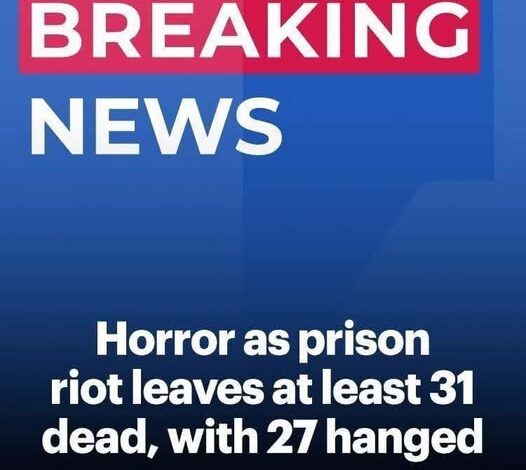
The dawn sky above the Machala prison didn’t break with the soft light of a new day; it shattered under the deafening roar of gunfire and the blood-curdling screams of men caught in a living nightmare. Before the sun had even crested the horizon, thirty-one souls had been silenced in an orgy of orchestrated violence that turned a correctional facility into a slaughterhouse. This was not the chaotic, spontaneous outburst of desperate men—this was a cold, calculated military operation. With reports of gruesome hangings and systematic asphyxiations, the world is left reeling. How did a prison dissolve into an execution chamber overnight?
What initially appeared to the outside world as a standard prison riot has been exposed as something far more sinister. Inside the walls, the carnage was methodical. Witnesses and early intelligence reports suggest that the inmates weren’t just fighting each other; they were being hunted. The scenes unfolding in Machala speak to a horrifying level of coordination, where violence was used as a precise tool of power. The sheer brutality of the deaths—many involving targeted executions rather than the typical blunt-force trauma of prison skirmishes—has left even seasoned investigators chilled to the bone. This wasn’t a riot; it was a purge.
The massacre has laid bare the hollowed-out remains of Ecuador’s beleaguered prison system. For years, the facility has functioned less like a place of correction and more like a franchise headquarters for powerful drug-trafficking cartels. These criminal networks have effectively colonized the prison infrastructure, turning overcrowded blocks into fortified operational hubs. Behind the bars, the state’s authority has long been a mere suggestion. In the absence of a meaningful government presence, the gangs have stepped in to impose their own brutal brand of order. They control the flow of contraband, they dictate the terms of survival, and as evidenced by the events in Machala, they now decide who gets to live and who dies.
The spark that supposedly ignited this powder keg was a administrative decision: the transfer of high-profile inmates to a newer, high-security facility. To the government, it was a routine logistical maneuver intended to break the back of gang influence. To the criminal syndicates, it was a declaration of war—a direct threat to the power structures they had spent decades cementing. The transfer triggered a violent preemptive strike. The gangs, fearing that the reorganization would dilute their control or lead to the loss of their prized soldiers, mobilized their ranks. The message was clear: the state might own the building, but the cartels own the inmates.
Outside the prison gates, the scene was one of unbearable desperation. As news of the massacre filtered out, hundreds of family members converged on the perimeter, their faces gaunt with terror. For hours, they stood in the rain, clawing at the fences, screaming for names, and begging for a shred of confirmation that their loved ones were not among the thirty-one bodies being loaded into vans. The prison authorities, overwhelmed and seemingly paralyzed by the scope of the atrocity, offered nothing but agonizing silence. Lists of the deceased were slow to be released, and the uncertainty turned the waiting crowd into a sea of raw, jagged grief.
Government officials, sequestered in secure offices far from the smell of cordite and copper, were quick to hold press conferences promising swift justice and comprehensive reform. They spoke of “investigations,” “accountability,” and a “renewed commitment to security.” But for those who have watched Ecuador’s prison crisis spiral for years, these words ring hollow. The drug-trafficking networks that operate within these walls are not disorganized street gangs; they are disciplined, well-funded, and deeply entrenched organizations with scouts, hit squads, and intelligence networks that often rival those of the state itself. They possess a structure that allows them to adapt to pressure, absorb state efforts at reform, and continue their business with lethal efficiency.
The Machala tragedy is not a freak occurrence; it is a grim, inevitable milestone in a cycle of violence that shows no sign of abating. The prison system has become a mirror held up to the fractured state of the nation, reflecting the same struggle against corruption, instability, and organized crime that plagues the streets. If the state cannot maintain a monopoly on force within its own institutions, it loses the moral and physical authority to govern outside of them. The Machala massacre serves as a thunderous warning that the current trajectory is unsustainable. The prison has become a battlefield, and as long as the cartels are allowed to hold the keys, the bloodletting will continue with devastating, predictable regularity.
As the international community watches, the questions remain: who ultimately holds the power in Ecuador, and what will it take to break the cartels’ grip? The victims of Machala were not just inmates; they were pawns in a high-stakes war for dominance that has turned the correctional system into a meat grinder. Their deaths, as brutal and senseless as they were, are merely the latest chapter in a long, dark history of neglect. The tragedy has forced a national reckoning, demanding that we ask whether any amount of “reform” can truly solve a problem that is systemic, deep-rooted, and increasingly militant. Without an absolute and unflinching reclamation of these facilities by the state, the next massacre is not a matter of “if,” but a terrifying matter of “when.” The silence that now hangs over the Machala facility is not one of peace—it is a chilling warning of the storm that is yet to come.