Have you ever walked past a tall wild plant growing near a roadside, field, garden edge, or empty lot without realizing it has a long history in traditional herbal practices? Many plants that people quickly dismiss as weeds have been observed, collected, and used by communities for generations. One of those plants is mullein, known scientifically as Verbascum thapsus.
Mullein is easy to overlook until you know what to look for. It often grows in dry, disturbed soil and can appear in places where other plants struggle. To some people, it may seem like nothing more than a rough roadside weed. But to herbal enthusiasts, gardeners, and plant lovers, mullein is a fascinating species with a recognizable appearance and a deep place in folk traditions.
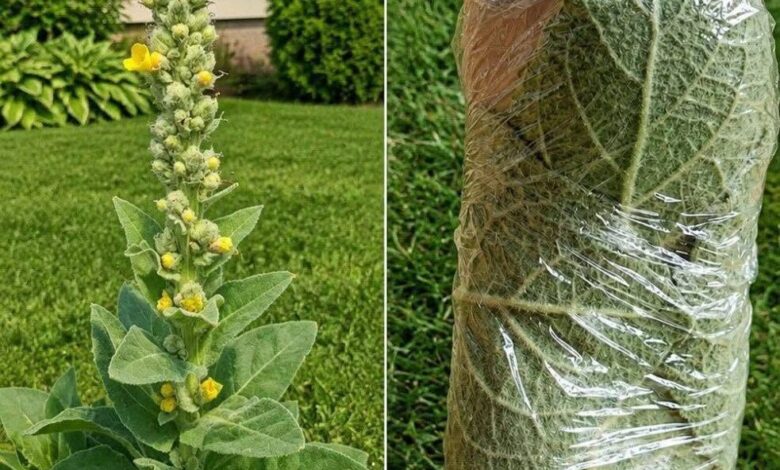
The plant is best known for its soft, fuzzy leaves and tall flowering stalk covered with bright yellow blossoms. Its leaves have a thick, velvety texture that makes the plant stand out from many other wild herbs. When mature, mullein can grow several feet tall, rising above grasses and smaller plants like a yellow-flowered torch. Because of this striking shape, it is often noticed once it reaches its second year of growth.
Mullein is a biennial plant, meaning it usually completes its life cycle over two years. During its first year, it grows close to the ground in a circular cluster of large, pale green leaves. This low-growing formation is called a rosette. The leaves are broad, soft, and covered in fine hairs, giving them a woolly or fuzzy feeling. In this stage, the plant may not look especially dramatic, but it is already building the energy it will need for the following year.
In its second year, mullein changes dramatically. From the center of the leaf rosette, it sends up a tall stalk that can become quite impressive in height. Along this stalk, clusters of small yellow flowers begin to appear. These flowers attract pollinators and give the plant its distinctive appearance. Once the plant flowers and produces seeds, its life cycle is complete.
Although mullein is native to Europe, Asia, and North Africa, it has spread to many other parts of the world. Today, it can be found across North America and in many other regions where conditions allow it to thrive. Because it grows easily in poor soil, open spaces, and disturbed ground, it is often seen in places where humans have changed the landscape.
This ability to grow almost anywhere is one reason many people consider mullein a weed. It can appear along driveways, fence lines, pastures, construction sites, and vacant lots. However, the word “weed” often says more about human preference than plant value. A weed is usually just a plant growing where someone does not want it. Mullein may be unwanted in one garden, but admired in another for its beauty, usefulness, or connection to traditional plant knowledge.
For generations, mullein has been valued in folk medicine and traditional herbal preparations. People have historically used different parts of the plant in teas, infusions, oils, compresses, and steam preparations. Herbal traditions often associate mullein with respiratory comfort, soothing preparations, and external applications. However, it is important to understand that traditional use does not automatically mean a treatment is scientifically proven or medically approved.
Much of mullein’s popularity comes from its long history rather than from confirmed modern medical claims. Many people are drawn to the plant because it represents a connection to older ways of living, when people paid close attention to the plants around them and used what was available in their environment. In that sense, mullein is not only interesting as a plant, but also as a piece of cultural memory.
One of the most common traditional preparations involving mullein is herbal tea. Dried mullein leaves have often been steeped in hot water to create a mild herbal drink. Some people enjoy it because of its association with old-fashioned herbal practices. However, because the leaves are covered in tiny hairs, mullein tea is usually strained very carefully through a fine filter or cloth before drinking. This helps remove small plant particles that may irritate the throat.
Mullein flowers have also been used in traditional infused oils. In some folk practices, the yellow flowers are placed in oil and allowed to infuse over time. These oils have historically been used externally or in traditional ear-related folk remedies, though anyone dealing with ear pain, infection, injury, or ongoing symptoms should seek proper medical advice instead of relying on home preparations.
Another reason mullein attracts attention is its appearance. The tall flowering stalk and soft leaves make it easy to identify once you know the plant’s features. However, plant identification should always be done carefully. Many wild plants can look similar to beginners, and mistakes can be risky. Anyone interested in foraging or using wild plants should consult reliable field guides, experienced botanists, or trained herbal professionals before harvesting or preparing anything.
In recent years, mullein has become popular on social media, especially through viral wellness trends. One trend shows people wrapping mullein leaves around their feet with plastic wrap and claiming the plant can “pull toxins” from the body overnight. These videos often attract attention because they are simple, dramatic, and connected to the growing interest in natural remedies.
However, there is currently no solid scientific evidence showing that placing mullein leaves on the feet removes toxins from the body. The idea may sound appealing, but the human body already has complex systems for processing and removing waste. The liver, kidneys, digestive system, lungs, skin, and lymphatic system all play important roles in normal biological function. A leaf wrap has not been proven to replace or improve those natural processes.
This does not mean mullein is uninteresting or worthless. It simply means people should separate traditional plant appreciation from exaggerated online claims. A plant can have cultural value, historical use, and botanical beauty without being treated as a miracle cure. In fact, respecting a plant often means being honest about what is known, what is traditional, and what has not been proven.
Social media can make herbal trends spread very quickly, but it does not always provide full context. A short video may show a dramatic result or make a confident claim without explaining safety, proper identification, dosage, allergies, contamination risks, or lack of evidence. That is why caution is important. Natural does not always mean safe for everyone, and traditional does not always mean appropriate for every situation.
People who are pregnant, nursing, taking medication, managing chronic illness, or dealing with serious symptoms should be especially careful with herbal products. Even gentle herbs can cause reactions in some individuals. Wild plants may also be exposed to pesticides, road pollution, animal waste, or other contaminants depending on where they grow. Harvesting plants from roadsides or unknown areas can introduce additional risks.
For those interested in mullein from a gardening or educational perspective, the plant can still be appreciated without making medical claims. It can be observed as part of a wildflower habitat, studied for its growth cycle, photographed for its unusual texture, or identified as part of a local plant walk. Its tall flower stalks can attract pollinators, and its presence can teach people about biennial plants, disturbed soils, and the difference between weeds and useful wild species.
Mullein also reminds us that many common plants have complicated reputations. Some people pull them out without a second thought, while others value them as part of herbal tradition. The same plant can be considered a nuisance, a teaching tool, a folk remedy, a pollinator plant, or a symbol of old-world herbal knowledge depending on who is looking at it.
That is what makes plants like mullein so interesting. They challenge us to look more closely at the natural world around us. A plant growing at the edge of a road may have a history that stretches across continents and centuries. Its soft leaves, yellow flowers, and sturdy stalk may tell a story of adaptation, tradition, and human curiosity.
In the end, mullein is more than just a wild plant with fuzzy leaves. It is a reminder that nature often hides in plain sight. It shows how easily something ordinary can carry layers of meaning, from botany and ecology to folklore and modern wellness culture. While exaggerated claims should be approached with skepticism, the plant itself remains worthy of attention.
Whether you notice mullein in a field, beside a path, or in a garden corner, it invites a slower kind of observation. Instead of seeing only a weed, you may begin to see a plant with history, character, and a long relationship with the people who have studied and used it over time.
The most responsible way to appreciate mullein is with curiosity and caution. Learn how to identify it correctly. Understand the difference between traditional use and proven medicine. Be skeptical of viral claims that promise dramatic results. And above all, remember that even the most common plants can have stories worth knowing.