Pulled my beef roast out of the slow cooker and saw these weird white stringy things poking out of the meat. They look like little worms or parasites. Is the meat infested?

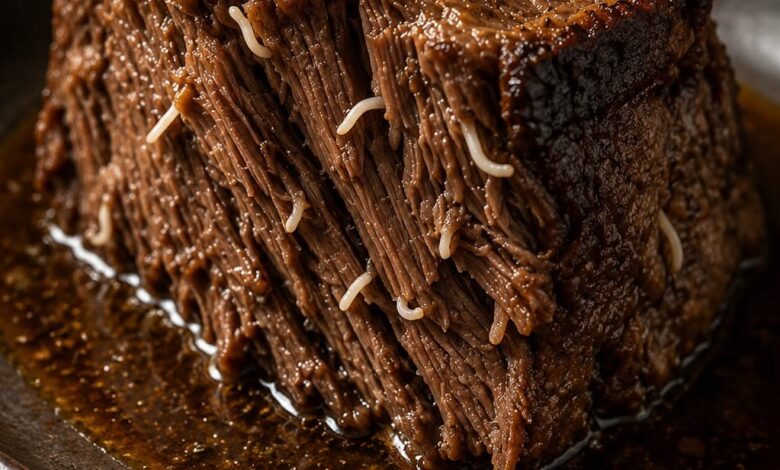
Those pale, stringy pieces that sometimes appear in slow-cooked beef can look alarming at first glance, especially when they resemble tiny white threads pulled through the meat. It is easy to understand why someone might worry they are seeing worms or parasites. But in most cases, those strands are not anything dangerous at all. They are simply normal parts of the meat becoming visible as the roast breaks down during cooking.
Beef roasts are made up of muscle fibers held together by connective tissue. That connective tissue contains collagen, a tough protein that helps give raw meat its structure. Cuts used for slow cooking, such as chuck roast, brisket, short ribs, or round, often contain more connective tissue because they come from harder-working parts of the animal. When cooked quickly, those cuts can stay tough. But when exposed to low, steady heat over several hours, the collagen begins to soften and transform.
That transformation is exactly what makes slow-cooked beef tender. As collagen breaks down, it turns into gelatin, adding moisture, richness, and body to the meat. During that process, some of the connective tissue can appear as pale, white, string-like strands or soft, slippery pieces tucked between the fibers. It may look strange, especially if you are pulling the meat apart and noticing it for the first time, but it is usually a sign that the roast has cooked long enough for the tough parts to loosen.
In other words, what looks unsettling may actually be part of what makes the beef taste good. The same collagen that appears as white threads is also what helps create the juicy, shreddable texture people expect from pot roast, stew meat, or barbecue-style beef. It is not a flaw in the meat. It is the science of slow cooking becoming visible.
True parasites in beef are very uncommon in countries with modern meat inspection and food-safety systems. They are also not likely to survive proper cooking temperatures. A safely cooked roast that has been handled, stored, and cooked correctly is very unlikely to contain anything living or harmful. Most concerns come from appearance rather than actual danger, because softened connective tissue can take on odd shapes once the meat starts falling apart.
There are a few simple ways to tell the difference. Connective tissue usually looks irregular, soft, slick, or gelatinous. It pulls apart easily and blends into the meat. It may stretch, shred, or melt into the surrounding fibers. Parasites, by contrast, would be more distinct, firm, and uniform in shape, and they would not look like random softened tissue spread naturally through the roast. If the strands seem to be part of the meat structure itself, they are almost certainly collagen or fat.
Food safety still matters, of course. Beef should smell normal, be stored at safe temperatures, and be cooked properly. If the meat has a sour odor, slimy texture before cooking, unusual discoloration, or was left out too long, those are separate warning signs and should be taken seriously. But if the roast smelled normal, was refrigerated correctly, cooked thoroughly, and reached a safe internal temperature, the white strands are not a reason to panic.
For slow-cooked beef, tenderness often comes from breaking down the very tissues that can look odd on the plate. The pale strings are usually not worms, parasites, or contamination. They are collagen-rich connective tissue softening into gelatin, adding flavor and tenderness to the dish. What may look disturbing at first is usually just proof that heat, time, and moisture have done their work.
So if your beef was handled safely and cooked properly, those “worms” are almost certainly harmless. They are not a hidden threat in the roast. They are part of the animal’s natural structure, transformed by slow cooking into the texture that makes a tough cut rich, tender, and satisfying.