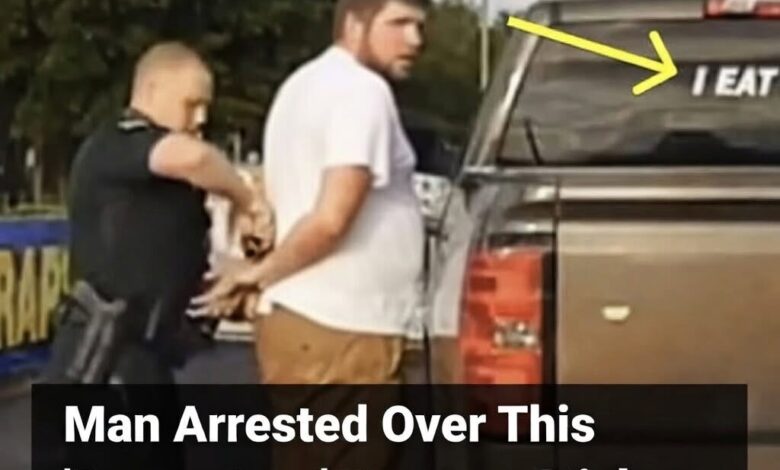
Dillon Shane Webb was driving through Lake City, Florida, when a sheriff’s deputy noticed a decal on the rear window of his vehicle. The sticker read: “I EAT ASS.” It was crude, intentionally provocative, and clearly meant to get a reaction. But what followed turned a roadside encounter into a constitutional controversy.
The deputy claimed the decal was obscene and said it violated Florida’s disorderly conduct laws. Webb disagreed. He refused to remove the sticker, cover part of it, or change the message. Instead, he calmly argued that the words on his vehicle were protected by the First Amendment. To him, it was a joke. To the deputy, it was grounds for arrest.
Moments later, Webb was placed in handcuffs. His car was searched, he was taken to jail, and he ended up with a mugshot over a phrase that many courts would likely view as offensive but still constitutionally protected speech. The case quickly became less about one vulgar sticker and more about a much larger question: can the government punish expression simply because an officer finds it distasteful?
Within days, prosecutors dropped the charges. The sheriff’s office backed away from the case, but by then the consequences had already landed. Webb had spent time in jail. His name and face had entered the public record. What began as a crude decal had become a warning about how easily authority can turn personal offense into legal punishment.
Webb later sued, arguing that no officer should have the power to arrest someone merely because their speech is insulting, uncomfortable, or embarrassing to see in public. His argument reached the heart of the First Amendment: free speech does not exist to protect only polite language, popular opinions, or messages everyone agrees with. It exists precisely because speech can be ugly, rude, offensive, and still beyond the reach of government retaliation.
The case became a strange but revealing snapshot of America’s ongoing fight over expression. It forced people to confront an uncomfortable truth: free speech is easiest to defend when the message is noble, thoughtful, or politically convenient. The real test comes when the words are crude, tasteless, and impossible to dress up as respectable.
Webb’s sticker was not elegant. It was not profound. It was not the kind of speech anyone would frame as a civic ideal. But that was exactly the point. If the government can punish a person for a vulgar joke on a car window, then the boundary of acceptable speech begins to depend not on law, but on the mood, taste, and personal judgment of whoever happens to be wearing the badge.
In that sense, Webb’s case was never really about four words on a rear windshield. It was about power. It was about whether constitutional rights still apply when speech makes people uncomfortable. And it was about the danger of allowing government officials to decide that being offended is enough reason to put someone in handcuffs.