I Thought Someone Had Spilled Rice All Over My Trash Can—Then I Looked Closer and Almost Screamed

Have you ever spotted something strange and instantly wished you hadn’t?
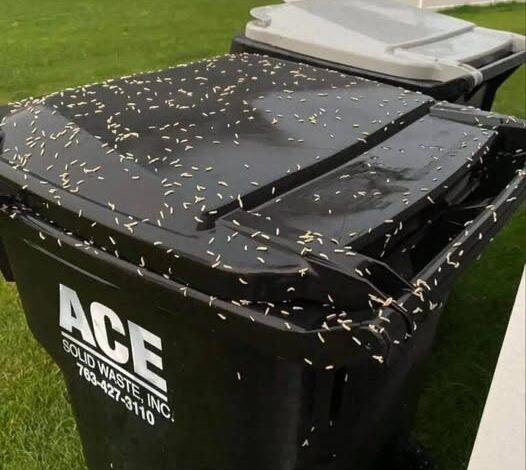
That’s exactly what happened when someone opened their garbage bin one morning and noticed what looked like dozens of tiny grains of rice scattered across the lid.
At first, it didn’t seem like a big deal.
Just a little mess.
Maybe something had spilled.
Maybe a torn food package had leaked.
But then the “rice” started moving.
And that’s when panic set in.
What looked harmless at first glance turned out to be something many homeowners dread discovering:
Maggots.
And if you’ve ever encountered them, you know how quickly a normal day can turn into a nightmare.
Where Do Maggots Come From?
One of the biggest misconceptions is that maggots somehow appear out of nowhere.
They don’t.
Maggots are actually fly larvae.
Adult flies are constantly searching for places to lay eggs, especially where they can find moisture, warmth, and decaying organic material.
Unfortunately, a garbage bin offers exactly what they’re looking for.
A single fly can lay dozens—sometimes hundreds—of eggs on:
- Meat scraps
- Fish remains
- Spoiled fruit
- Food-soiled packaging
- Organic waste
Within a short period, those eggs hatch into tiny larvae.
Before you know it, your trash can becomes an all-you-can-eat buffet for hundreds of hungry maggots.
Why Summer Makes It Worse
Hot weather accelerates the entire process.
Warm temperatures help fly eggs hatch faster and allow larvae to grow more quickly.
That’s why infestations seem to explode during the summer months.
A trash can that seemed perfectly normal yesterday can suddenly be crawling with maggots today.
How to Get Rid of Maggots Fast
If you discover maggots in your garbage can, quick action is important.
1. Use Boiling Water
One of the simplest and most effective methods is pouring boiling water directly onto the maggots.
The heat kills them almost instantly and helps loosen debris stuck inside the bin.
2. Deep-Clean the Bin
After removing the larvae, thoroughly scrub the trash can using:
- Hot water
- Dish soap
- Disinfectant cleaner
Pay special attention to corners, cracks, and the underside of the lid where flies often hide.
3. Try Vinegar and Baking Soda
A mixture of hot water, white vinegar, and baking soda helps eliminate odors while cleaning away residue that attracts flies.
4. Use Salt or Garden Lime
Sprinkling salt or garden lime in the bottom of the bin can help dry out any remaining larvae and discourage future infestations.
How to Prevent Maggots From Coming Back
The good news?
A few simple habits can dramatically reduce the chances of another infestation.
Seal Trash Bags Tightly
Open or loosely tied bags make it easy for flies to access food waste.
Always secure garbage bags before placing them in the bin.
Double-Bag Meat and Fish Waste
Protein-rich scraps are among the biggest attractions for flies.
Wrapping them securely helps contain odors.
Keep the Lid Closed
Even a partially open lid can give flies enough access to lay eggs.
A tightly sealed bin is your best defense.
Clean the Bin Regularly
A quick rinse every week helps remove food residue and odors that attract insects.
Use Bin Liners
Trash can liners create a barrier that prevents leaks and makes cleaning easier.
Try Natural Fly Repellents
Many people use:
- Citrus peels
- Bay leaves
- Peppermint oil
- Eucalyptus oil
- Diatomaceous earth
These can help discourage flies from settling near the bin.
The Truth Most People Don’t Realize
Finding maggots doesn’t necessarily mean your home is dirty.
It simply means flies found the conditions they needed to reproduce.
Even clean households occasionally deal with infestations, especially during warm weather.
The key is acting quickly and preventing conditions that attract flies in the first place.
The Bottom Line
If you ever open your trash can and notice what looks like scattered grains of rice, take a closer look.
You might discover something very different.
While maggots are unpleasant, they’re usually easy to eliminate with proper cleaning and a few preventive measures.
And once you know what attracts them, you can make sure your garbage bin never becomes their favorite place to move in.