They will remember the smell first.
Long after the streets are reopened, long after the barricades come down and the last fire hose is rolled back into place, Millharbor residents will remember the strange, terrible mixture that settled over the city that day: burned fabric, splintered timber, wet ash, and something older beneath it all, as if history itself had caught fire.
For generations, the McAllister Textiles Building had stood near the heart of town as a quiet monument to Millharbor’s industrial past. Its brick walls had watched workers arrive before sunrise, watched families build lives on mill wages, watched the city shift from factory whistles to storefronts, cafés, and renovated apartments. To some, it was just an old building. To others, it was part of the city’s memory — weathered, stubborn, and familiar.
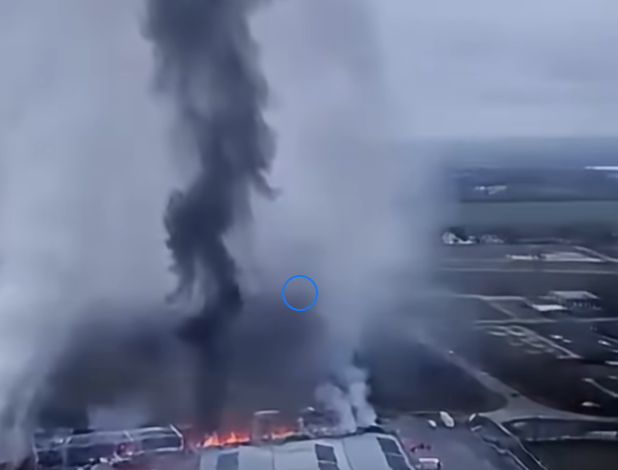
Then, in less than an hour, it became the center of a disaster visible from miles away.
The first smoke rose like a warning. Thin at first, then thickening into a dark column that climbed above the rooftops and spread across the sky. By the time the first engines arrived, flames had already found the building’s old bones. Dry wood, aging beams, stored materials, and wind combined into a fierce and fast-moving blaze that seemed to breathe through every broken window.
Fire crews moved quickly, but the conditions fought them at every turn. The wind pushed smoke down narrow side streets, turning familiar blocks into choking tunnels. Visibility dropped. Ash drifted over parked cars and porches. Sirens echoed between buildings as firefighters attacked the flames from multiple sides, working under heat so intense it seemed to bend the air around them.
Residents nearby were told to leave with almost no time to think. Some ran out in slippers. Some carried pets wrapped in blankets. Others clutched photo albums, medication bottles, laptops, or the small irreplaceable things people reach for when they suddenly understand that a life can be reduced to what fits in their hands.
There were children crying on sidewalks, elderly residents coughing into sleeves, neighbors shouting names through the smoke, and police officers moving door to door to make sure no one had been left behind. The fire did not only threaten a building. It unsettled an entire community, forcing people into the street and into the terrifying uncertainty of not knowing what would still be standing by morning.
And yet, in the middle of the devastation, Millharbor revealed its spine.
Strangers became rescuers before anyone asked them to. People guided elderly neighbors down dark stairwells when the power failed. A teenager carried a frightened cat through the smoke while its owner leaned on a walker. Two men who had never spoken before kicked open a jammed back gate so residents could escape through an alley. Someone handed out bottled water from the trunk of a car. Someone else wrapped a coat around a woman who had fled without shoes.
The city’s restaurants, many of them only blocks away from the fire zone, began closing their dining rooms not out of fear, but to help. Owners turned off their signs, cleared their tables, and turned their kitchens toward the people who needed them most. Soup, sandwiches, coffee, and trays of hot food began appearing for evacuees, firefighters, police, and volunteers. Exhausted first responders stood in parking lots with soot on their faces, eating quickly before returning to the line.
By late afternoon, community centers had become makeshift shelters. Folding tables were covered with blankets, phone chargers, diapers, bottled water, pet food, and donated coats. Volunteers wrote names on clipboards. Families waited for updates. Local churches opened their doors. Teachers helped calm children who recognized the fear in adult faces but did not fully understand what had happened.
Donation lists began circulating before the fire was fully contained.
By nightfall, Millharbor was wounded, but not silent. The glow from the ruins still pulsed against the dark sky, and smoke lingered over the town like a reminder of how quickly the familiar can be lost. The McAllister Textiles Building, once a landmark of labor and local pride, had been reduced to a blackened shell. Its windows were gone. Its roof had failed. Its brick walls, where they still stood, were scorched and unstable.
For many residents, the loss felt personal. The building had held more than wood, fabric, and machinery. It held stories. Grandparents had worked there. Families had depended on it. Old photographs showed workers lined up outside its entrance in coats and caps, unaware that one day their workplace would become a symbol not only of what Millharbor had been, but of what it was capable of surviving.
Officials will investigate the cause. Engineers will assess what remains. Insurance claims will be filed, records reviewed, and decisions made about whether anything can be saved. Those processes will take time. They will be necessary, but they will not fully capture what the fire meant to the people who watched it consume a piece of their city.
Because disasters are measured in more than damage estimates.
They are measured in the hand that reaches for a stranger in the smoke. In the restaurant owner who feeds firefighters without asking who will pay. In the volunteer who stays late at a shelter to sort donated clothes. In the child who gives up a blanket for someone who lost everything. In the quiet, stubborn decision of a town to respond to destruction with care.
The buildings may be gone, and the skyline of Millharbor may never look exactly the same again. But the city’s answer to the fire will outlast the flames. Long after the smoke has cleared, people will remember not only what burned, but who showed up.
The McAllister Textiles Building was part of Millharbor’s history.
What happened after it caught fire may become part of its soul.