Few things catch a homeowner’s attention faster than discovering a strange creature in the garden. It might appear after a rainfall, stretched across a sidewalk, hiding beneath a flowerpot, or gliding slowly through damp soil. At first glance, it may resemble a worm, but a closer look reveals something far more unusual.
Its body is flat instead of round.
Its movement seems smooth and almost snake-like.
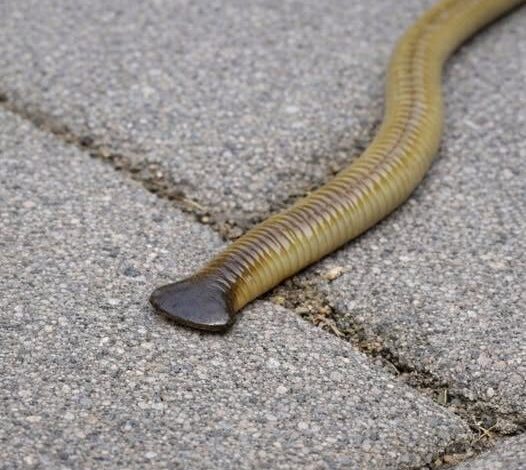
And perhaps most surprising of all, its head is shaped like a tiny hammer or shovel.
For many people, the first reaction is confusion. Some assume it must be a rare mutation, an unfamiliar pest, or even something that doesn’t belong in nature at all.
In reality, this unusual creature is known as a hammerhead worm, a species of land flatworm that has been drawing increasing attention from gardeners, homeowners, and environmental experts in recent years.
While it may look unusual, the hammerhead worm is a real organism with a fascinating biology and an important role in the ecosystems where it appears.
What Exactly Is a Hammerhead Worm?
Hammerhead worms belong to a group of terrestrial flatworms known for their elongated bodies and distinctive head shapes.
Their most recognizable feature is the broad, flattened head that resembles a hammer, spade, or shovel. This unusual shape is what gives them their common name.
The rest of the body is long, soft, and ribbon-like. Depending on the species, coloration may range from tan and gray to brown or dark olive. Some individuals display stripes running down the length of their bodies, while others appear more uniform in color.
Unlike earthworms, which have segmented cylindrical bodies, hammerhead worms are completely flat.
They move using tiny cilia and mucus secretions that allow them to glide smoothly over surfaces.
Some species can grow surprisingly large, reaching lengths of more than a foot under favorable conditions.
Their size and appearance often make them stand out immediately when encountered outdoors.
Where Are They Usually Found?
Hammerhead worms thrive in moist environments.
They prefer areas where humidity remains high and the soil stays damp for extended periods. Gardens, flower beds, compost piles, mulch, and shaded landscaping areas provide ideal habitats.
People most often notice them after rainstorms.
When moisture levels rise, hammerhead worms may emerge from the soil and become visible on sidewalks, patios, driveways, and garden paths.
Although seeing one in the open may seem unusual, it is simply part of the worm’s natural movement within its environment.
During dry conditions, they often remain hidden beneath debris, rocks, logs, or leaf litter where moisture levels are more stable.
How Did They Spread So Widely?
One reason hammerhead worms have attracted attention is their growing presence in regions where they were not historically found.
Many species originated in parts of Southeast Asia and surrounding tropical areas. Over time, however, global trade and transportation helped them spread to other parts of the world.
Unlike larger animals that are easy to detect during transport, hammerhead worms can travel unnoticed.
They may hide within:
- Potted plants
- Soil shipments
- Nursery stock
- Mulch deliveries
- Landscaping materials
Because they are small, flexible, and capable of surviving in moist environments, they can be transported long distances without attracting attention.
Once introduced into a suitable habitat, they may establish local populations and begin reproducing.
Their Surprising Role in the Environment
At first glance, hammerhead worms might seem harmless.
However, what makes them particularly interesting is their feeding behavior.
Hammerhead worms are predators.
Their preferred prey consists largely of earthworms and other small soil-dwelling organisms.
Earthworms play an essential role in maintaining healthy soil. As they move through the ground, they create tunnels that improve aeration and water movement. They also help break down organic matter and recycle nutrients back into the soil.
Because of these benefits, earthworms are often considered one of the most valuable organisms in a garden ecosystem.
Hammerhead worms hunt by following chemical signals left behind by earthworms.
Once prey is located, the flatworm uses sticky secretions to capture and immobilize it before feeding.
Although individual worms may have a limited impact, larger populations could potentially reduce local earthworm numbers over time.
This is one reason environmental specialists monitor their spread in certain regions.
An Unusual Ability to Regenerate
Perhaps the most fascinating characteristic of hammerhead worms is their remarkable ability to regenerate.
Many organisms can repair damaged tissue, but hammerhead worms take this ability much further.
When fragmented, portions of the worm may sometimes regenerate missing body parts and develop into complete individuals.
This unique biological trait contributes to their resilience and helps explain why they can be difficult to manage once established.
It also means that attempts to destroy them through cutting or chopping may not always have the intended effect.
Instead of eliminating the organism, fragmentation may occasionally contribute to further reproduction under suitable conditions.
This unusual capability continues to interest scientists studying regeneration and developmental biology.
Are Hammerhead Worms Dangerous?
One of the most common questions people ask after discovering a hammerhead worm is whether it poses a danger to humans or pets.
Fortunately, these worms are not aggressive.
They do not bite.
They do not sting.
They do not actively attack people or animals.
However, experts generally recommend avoiding direct contact.
Like many organisms, hammerhead worms produce mucus that helps them move and protects their bodies from drying out.
In some individuals, contact with this mucus may cause mild skin irritation or discomfort.
For that reason, handling should be avoided whenever possible, and gloves should be used if removal is necessary.
Pets are unlikely to face serious harm from casual encounters, but allowing animals to consume unfamiliar wildlife is generally discouraged.
What Should You Do If You Find One?
If you discover a hammerhead worm in your yard, the most important response is informed caution rather than panic.
The worm is not an emergency situation, nor does its presence indicate widespread environmental damage.
However, proper handling is recommended.
Experts generally advise avoiding direct skin contact and using gloves or a tool to move the worm if removal is necessary.
Afterward, washing hands and cleaning any tools used is a sensible precaution.
The goal is simply to handle the situation responsibly without unintentionally contributing to the worm’s spread.
Why Gardeners Are Paying Attention
The growing interest in hammerhead worms stems less from fear and more from ecological awareness.
Healthy gardens depend on complex networks of organisms working together beneath the soil surface.
Earthworms, microorganisms, insects, fungi, and countless other species all contribute to soil health.
When a new predator enters that system, it has the potential to influence the balance over time.
Understanding which organisms are present in a garden allows homeowners to make informed decisions about soil health and environmental management.
Awareness is often more valuable than alarm.
Final Thoughts
The hammerhead worm is one of nature’s more unusual-looking creatures. Its distinctive shovel-shaped head, smooth movement, and surprising size often make it seem almost out of place in an ordinary backyard.
Yet despite its strange appearance, it is a real and fascinating part of the natural world.
Its story highlights how interconnected ecosystems have become through global trade, transportation, and environmental change. It also serves as a reminder that even small organisms can play significant roles within local habitats.
Finding a hammerhead worm may be surprising, but it is also an opportunity to learn more about the hidden life that exists beneath our feet.
Sometimes the most unusual visitors in the garden turn out to be among the most interesting.