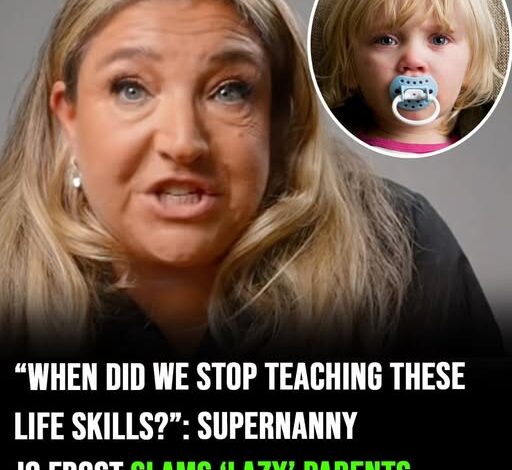
Jo Frost’s message stands out because it speaks directly to a concern many parents feel but may not want to admit: that love, stress, and busy schedules can slowly turn into doing too much for children. She is not saying that parents do not care enough. In fact, she is pointing out that many parents care so deeply that they try to remove every struggle, every delay, and every inconvenience from their child’s day. But in doing so, they may unintentionally take away the very experiences children need in order to grow.
Her warning is about the everyday shortcuts that can seem harmless in the moment. Using a stroller when a child is old enough to walk, offering a pacifier every time they become upset, feeding them when they can begin feeding themselves, or completing every small task for them may save time and reduce conflict. However, over time, these patterns can stop children from developing patience, confidence, and basic independence. What looks like help can sometimes become a barrier. Children learn by trying, failing, repeating, and eventually mastering small responsibilities on their own.
Frost’s point is not that parents must be perfect or that every child should develop at the exact same pace. Her message is about being present enough to recognize when a child is ready to learn and patient enough to let them practice. Teaching a child to tie their shoes, sit properly at a table, brush their teeth, ride a bike, clean up after themselves, or use words to express frustration takes time. It can be messy, tiring, and inconvenient, especially for parents who are already overwhelmed. Still, these small lessons are not minor. They are the foundation for self-reliance.
When adults constantly step in too quickly, children may begin to believe they are not capable of doing things for themselves. They may become dependent not because they lack ability, but because they were never given enough chances to build it. Independence does not appear suddenly when a child becomes older. It is built slowly through everyday routines, responsibilities, and expectations.
Frost’s challenge is simple but uncomfortable: children need adults who are willing to slow down and teach, not just rescue and rush. Love should not only protect children from hardship; it should also prepare them for life. If parents do not give children the space to practice basic skills, make mistakes, and develop confidence, then it becomes unfair to be surprised when they later struggle with responsibility, discipline, and independence. Her message is a reminder that raising strong children often means allowing them to do hard things, even when it would be easier to do those things for them.