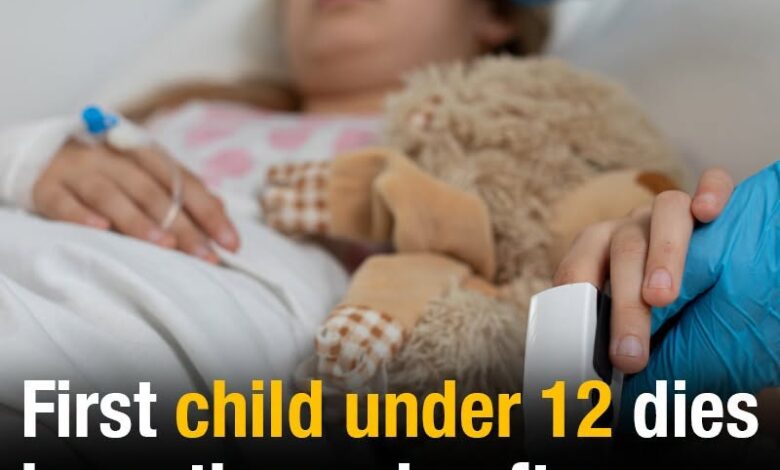
A child in the Netherlands has become the first person under the age of 12 to undergo euthanasia since the country expanded its assisted-dying regulations to include younger children in exceptional medical cases.
According to reports, the child had been suffering from a severe and incurable medical condition. Authorities have not disclosed the child’s exact age or the nature of the illness, citing privacy concerns for the family. The case was confirmed by Dutch Health Minister Sophie Hermans during the government’s annual review of late-term abortions and medically assisted deaths involving minors, which was presented to parliament earlier this week.
The case marks the first known use of the Netherlands’ revised euthanasia framework for children between the ages of 1 and 12. The policy was broadened in 2024 to allow doctors, under extremely limited circumstances, to assist in ending the life of a terminally ill child who is experiencing unbearable suffering and has no realistic chance of recovery.
Under the updated rules, euthanasia for children under 12 is not available as a general option. It may only be considered when a child is facing severe, persistent suffering that cannot be relieved through available medical treatment, pain management, or palliative care. The Dutch government has emphasized that the policy is intended for rare and exceptional cases in which doctors and parents believe there is no humane alternative left.
Before such a decision can be made, physicians must determine that the child’s condition is terminal, that there is no prospect of improvement, and that all reasonable options to reduce suffering have been exhausted. Parents must be closely involved in the process, and whenever possible, the child is also included in discussions in a manner appropriate to their age and understanding.
The procedure is subject to strict medical, ethical, and legal safeguards. Doctors must be able to show that they followed all required steps and that the decision was made only after careful consideration. Afterward, the case is reviewed by an independent committee made up of medical specialists, a legal expert, and an ethicist.
That committee evaluates whether the physician acted in accordance with accepted medical standards, current scientific knowledge, and the requirements of Dutch law. Its findings are then sent to prosecutors, who assess whether the procedure complied with the legal framework.
The confirmation of this case has renewed international debate over assisted dying, particularly when minors are involved. Supporters of the Dutch policy argue that it provides a compassionate option for families facing unimaginable suffering, especially in situations where medicine can no longer offer relief. They say the law is designed not to expand euthanasia broadly, but to address a very small number of tragic cases in which continued suffering may be considered unbearable and unavoidable.
Critics, however, continue to raise serious ethical concerns. Opponents question whether children so young can meaningfully participate in decisions about death, even with parental involvement and medical oversight. Others worry about the broader implications of allowing euthanasia for minors and argue that palliative care should remain the central focus in end-of-life treatment for children.
Dutch officials have maintained that the revised rules apply only in the most extreme circumstances. They have stressed that the safeguards are intended to prevent misuse and ensure that euthanasia is considered only when no other reasonable medical option remains.
The case represents a significant moment in the implementation of the Netherlands’ revised assisted-dying policy. It also highlights the deeply complex questions surrounding medical ethics, parental authority, children’s rights, suffering, and the limits of modern medicine.
For the family involved, the case is not merely a matter of law or policy, but a private tragedy shaped by illness, pain, and impossible choices. For the wider world, it has become part of an ongoing debate over how societies should respond when a child is gravely ill, suffering cannot be relieved, and every available path carries profound moral weight.