My brother stopped talking about dinner and went back to breakfast.
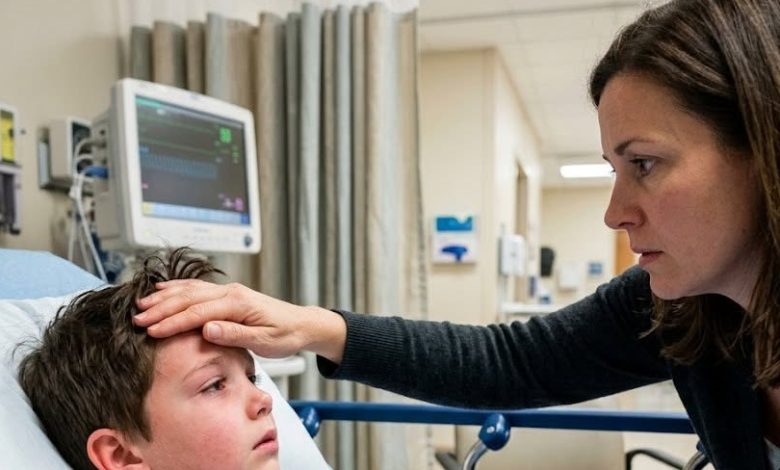
He asked me to stay on the line while he scrolled through the messages our mother had sent him that morning, and I watched my son breathe under the thin hospital blanket while the room hummed around us.
The air was cold.
I hadn’t eaten.
My son had.
Barely.
A nurse had gotten half a cup of ice into him, and he had managed two crackers before pushing the packet away with one finger.
My brother finally said, “I found the first one.”
I opened my notes app.
“Read it.”
At 11:17 that morning, our mother had written to him that my son had woken up feverish but was already improving.
Then came the part I had never heard.
She told him she had already spoken to me.
She hadn’t.
Not once.
According to the message, I supposedly agreed that everyone should keep the day normal and avoid making my son’s fever into a bigger event than it needed to be.
I stared at the screen in front of me even though there was nothing on it except my own notes.
“Send me that.”
He did.
The screenshot arrived before he spoke again.
I read it.
I checked the timestamp.
I saved it.
I put my phone facedown.
My son shifted beside me, and the blanket crackled again.
“Is Uncle still at dinner?” he asked.
“For a minute.”
He nodded like that made sense.
My brother kept scrolling.
Sometime after lunch, our mother had sent another message saying my son was asking for me but that giving in every time he complained would only teach him how to control adults.
My brother had replied with a thumbs-up.
He went silent when he reached that part.
I didn’t help him out of the silence.
He had not known what was happening.
But the thumbs-up was still there.
A server asked him something in the background.
I heard plates move.
Then my brother said, “I thought she meant he wanted you because he was bored.”
“I know.”
That was all I gave him.
He deserved enough space to understand what he had participated in without pretending it had been intentional.
My son rubbed one foot against the sheet and missed the edge twice before finding it.
I pulled the blanket lower.
“Keep reading,” I said.
At 3:52, our father had joined the thread.
His message was shorter.
He said they might take my son somewhere to be checked if the fever did not settle, but they did not want anyone calling me yet because I would “drop everything” and turn the afternoon upside down.
My brother stopped reading.
I could hear his breathing.
“Did you know they were thinking about taking him in?” I asked.
“No.”
“Did you know they hadn’t called me?”
“No.”
“Did you know he had been asking for me?”
“No.”
That was three answers.
All the same.
A minute earlier, my brother had been the person waiting at an anniversary table for the rest of his family to arrive.
Now he was the only person in that restaurant who could see, message by message, that my parents had spent the day protecting the dinner from my son instead of protecting my son from the fever.
He pushed his chair back.
I heard it scrape.
“I’m leaving.”
“You don’t need to race here.”
“I’m leaving anyway.”
He left.
That was the first thing that changed.
Until then, my parents still controlled two versions of the day.
There was the version my son lived through.
And there was the version they had handed everyone else.
My brother walking out of the restaurant put one person inside both versions.
A nurse named Dana came back to check the monitor and asked whether my son wanted more water.
He shook his head.
She guessed my parents had probably stepped out to move their car when staff first realized no adult was sitting with him.
I watched her write something on the board near the sink.
“They left,” I said.
Dana looked at me.
“They left the hospital?”
“Yes.”
Her pen stopped.
I asked her what time my son had been registered.
She checked the chart.
4:18.
I wrote it down.
Then I asked what staff had been told when he arrived.
Dana hesitated before answering, careful with every word.
The grandmother who brought him in had apparently said his mother was on the way.
That was me.
I had not known he was there.
I asked Dana to document exactly when I arrived and exactly what I had told her.
She nodded.
I didn’t ask her what the hospital would do with that information.
That part belonged to them.
My part was simpler.
I stayed.
My phone started vibrating against the plastic chair.
Mom.
I let it buzz twice.
Then I answered.
Her voice came out softer this time.
“I think everybody is getting worked up unnecessarily.”
I looked at my son.
“What did you tell the ER staff?”
A pause.
“That you were coming.”
“You hadn’t called me.”
“We knew you’d get there.”
“How?”
Another pause.
She changed direction.
“The nurse said he was already being taken care of. We weren’t abandoning him in a parking lot. He was in a hospital.”
I looked at Dana.
She was replacing an empty cup on the tray.
“Did anyone tell you that you could leave him without a guardian?” I asked.
My mother’s voice tightened.
“Don’t interrogate me.”
“I asked one question.”
“We were told he was safe.”
Dana heard enough to understand.
She leaned closer without touching my phone.
“No one here would tell a guardian to leave a child alone,” she said.
My mother went quiet.
Then came the concern.
The careful concern.
“I am trying to prevent him from becoming terrified every time his body feels different,” she said. “You reinforce fear. Somebody has to teach him resilience.”
My son was close enough to hear her voice but not every word.
I lowered the volume.
“You told the hospital I was coming before you even told me he was there.”
“We knew you would come.”
“You made sure of that after you left.”
“You are twisting this.”
I ended the call.
My hand was shaking by then, so I put the phone between my knees until it stopped.
I peeled half the label from a water bottle and stuck it to my thumb.
It did nothing.
A little later, my father texted me.
He said he had never agreed with leaving my son alone.
For about thirty seconds, I wanted that to be true.
I wanted one parent to have failed differently.
Not better.
Just differently.
Then my brother called from his car.
He had found another message.
This one was from Dad.
It had been sent before they reached the hospital.
My father had written that if my son was still complaining by late afternoon, they should get him checked, make sure someone knew where he was, and then go to dinner because changing the anniversary plans would “reward the behavior.”
I read the screenshot twice.
The second time was worse.
My father had not objected to the plan.
He had helped shape it.
I sent him one reply.
“I have the messages.”
Nothing came back.
For a while, the room went quiet except for the monitor and a cart rolling somewhere beyond the door.
My son asked whether the vending machine still sold pretzels.
“I think so.”
“You hate pretzels.”
“I do.”
He smiled once.
Small.
Gone fast.
Then my brother arrived.
His hair was still flattened on one side from whatever he had done to get ready for dinner, and his shirt smelled faintly like restaurant smoke when he bent beside the bed.
He didn’t start with an apology.
He didn’t start with our parents.
He looked at my son.
“Hey, buddy.”
My son stared at him.
“You missed dinner?”
“Yeah.”
“Because of me?”
My brother’s mouth opened.
Then closed.
He pulled the visitor chair closer.
“No.”
My son watched him for another second before looking down.
My brother sat.
He put his phone away.
He folded the paper wristband from the restaurant around one finger until it tore.
He stayed.
That mattered more than anything he could have said to me.
Once my son settled again, my brother showed me the entire message thread instead of selected screenshots.
There were no giant revelations hiding in it.
There was something worse.
Consistency.
From breakfast onward, every choice followed the same rule.
Do not call me yet.
Do not disrupt the plans yet.
Do not give the child the response he is asking for yet.
Wait.
Wait.
Wait.
At 12:46, my mother told my brother I had been informed.
At 3:52, my father said I should not be informed yet.
Both things could not be true.
And by the time they checked my son into the ER at 4:18, the lie had already been running for hours.
The hospital wasn’t where their story went wrong.
It was where maintaining it became harder.
I handed the phone back to my brother.
He didn’t take it immediately.
For one second, it sat between our hands.
Then he took it.
My mother started calling him.
He declined it.
She called again.
He declined it.
She called again.
He answered.
I could hear her from where I sat.
“Please don’t let your sister turn this into some permanent family rupture.”
My brother looked at me.
“What did you tell me before dinner?” he asked.
“I told you she had it handled.”
“No. You told me she had already picked him up.”
“Well, that was what was supposed to happen.”
“But it hadn’t happened.”
“You’re focusing on wording.”
My brother rubbed his forehead.
“No. I’m focusing on where he was.”
She tried again.
She reminded him it was his anniversary.
She said his wife was embarrassed.
She said the reservation had taken weeks to get.
She said everyone had been trying to make the evening special for him.
Concern, concern, concern.
Always arranged around the adults.
My brother looked toward the bed.
Then he said, “I’m staying here.”
He hung up.
A few minutes later, a hospital staff member asked to speak with me outside the room.
I went.
The hallway smelled like disinfectant and burnt coffee, and my shoulders hurt from holding them tight for so long that rolling them once made the muscles catch near my neck.
She asked who normally cared for my son.
I answered.
She asked whether he would be returning to my parents’ home after discharge.
“No.”
She asked whether they had access to him without me present.
“Not anymore.”
She asked a few more questions.
I answered those too.
I did not predict consequences.
I did not demand consequences.
I told the truth and let the record exist without trying to control what happened after it.
When I returned to the room, my brother was helping my son untangle the charging cord from the bed rail.
Neither of them was good at it.
I watched for several seconds before taking the plug from my brother and fixing it myself.
My brother gave me a look.
“That was my plan.”
“It was a bad plan.”
My son almost laughed.
For a moment, that was the whole room.
Later that evening, the doctor told me my son was responding well enough that discharge looked likely once they finished observing him and went through the instructions with me.
I wrote everything down.
Fluids.
Rest.
What to watch.
When to return.
I asked questions until I understood them.
For the first time all day, there was a path forward that did not depend on anybody in my family agreeing with me.
I texted both my parents together.
I kept it short.
My son would not be staying with them alone again.
They were not to pick him up, transport him, or make medical decisions for him unless I was present or had directly arranged it.
If they wanted to discuss what happened, they could discuss it with me later.
Not with him.
Not tonight.
My father read it first.
My mother replied first.
“You’re punishing us for one stressful afternoon.”
I did not answer.
Then she wrote that cutting grandparents out of a child’s life because of one disagreement was unhealthy.
I did not answer that either.
The boundary did not need a debate to become a boundary.
Around then, my brother stood and announced he was going downstairs to find something that qualified as food.
My son asked for apple juice.
My brother came back with apple juice, crackers, a turkey sandwich for me, and two chocolate bars nobody had requested.
He had also bought pretzels.
“You hate those,” my son told me.
“I know.”
My brother ate them.
It almost felt finished.
My son was safer.
My brother knew the truth.
The messages were saved.
My parents no longer had unsupervised access to him.
I had stopped arguing.
Then my mother walked through the ER entrance.
I saw her before my son did.
She still had the coat she wore to dinner folded over one arm, and she was carrying her purse close against her side as she scanned the room with the fast, irritated movements of someone looking for a problem she expected to solve.
My stomach tightened.
I stood.
My brother stood too.
She reached us and lowered her voice immediately.
“I came because this has gotten completely out of proportion.”
She looked past me toward my son.
“I want to explain to him that nobody abandoned him.”
“No.”
Her eyes came back to mine.
“He should not go home thinking his grandparents don’t love him.”
“You’re not having that conversation with him tonight.”
“I am trying to protect his relationship with us.”
“No.”
She looked at my brother.
He didn’t move.
For years, that would have been enough.
A glance toward him.
A sigh.
A reminder about family.
Someone would soften the edges for her.
My brother walked around her instead.
He went back to my son’s bed.
That was the final shift.
My mother could still explain herself.
She could still disagree.
She could still tell anyone who would listen that I was dramatic, overprotective, ungrateful, or determined to punish her.
What she could no longer do was decide who received which version of the day and count on the rest of us never comparing notes.
I asked her to leave.
She stared at me for several seconds.
Then she said, very quietly, “You’ll regret making this permanent.”
I opened the door wider.
She left.
No shouting.
No scene.
Just her walking toward the exit while my brother remained beside the bed.
When discharge finally came, I listened to every instruction again and packed the few things scattered around the room.
My phone went into my bag.
The crackers went into the side pocket.
The half-peeled water bottle went in the trash.
My son sat on the edge of the bed while I found his shoes.
He looked exhausted.
So did my brother.
“Uncle?” my son said.
“Yeah?”
“Are you mad I ruined your anniversary?”
My brother stopped tying one shoe.
“You didn’t.”
My son looked at him.
My brother finished the knot.
Then he picked up the other shoe.
Nobody gave my son a speech about resilience.
Nobody asked him to understand the adults.
Nobody told him he had misunderstood what happened.
Before we left, I thanked the staff and checked the room twice because exhaustion had made me certain I was forgetting something.
I wasn’t.
My brother carried the small bag.
I held my son’s hand.
At the doorway, my son looked back at the bed and noticed the hospital blanket sliding toward the floor.
My brother reached down first.
He lifted it, spread it over my son’s legs while we waited for the wheelchair, and tucked the edge beneath his feet.
My brother tucked the blanket under his feet.