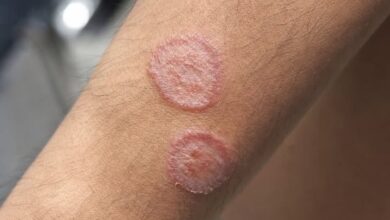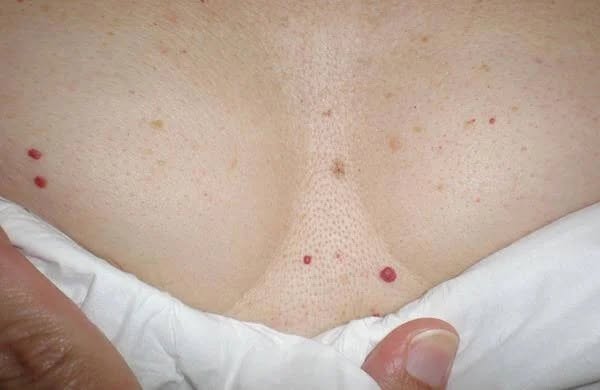
You’ve probably noticed them at some point — tiny bright red dots appearing on your chest, arms, neck, or back. At first, they may look harmless, almost like small moles or pinpoints of blood under the skin. Some people ignore them for years, while others suddenly panic after discovering several new ones seemingly overnight.
But what exactly are these mysterious red spots?
In many cases, they are known as cherry angiomas — small, benign growths made up of tiny blood vessels clustered together near the surface of the skin. Although they may look alarming at first, they are usually harmless and extremely common, especially as people age.
What Are Cherry Angiomas?
Cherry angiomas are also called:
- Senile angiomas
- Capillary angiomas
- Campbell-De Morgan spots
- Microangiomas
They are tiny vascular lesions formed by dilated capillaries beneath the skin. Most are bright red, though some may appear dark red, purple, or slightly raised over time.
Many are only about 1–2 millimeters wide, but some can grow larger and become more noticeable.
Doctors consider them benign, meaning they are not cancerous. In fact, millions of adults develop them naturally throughout life.
Why Do These Red Spots Appear?
Although the exact cause is not always fully understood, several factors are strongly linked to the development of cherry angiomas.
1. Aging
The most common cause is simply natural aging.
These spots tend to appear more frequently after the age of 30 or 40 as blood vessels weaken and skin structure changes over time. For many people, the number of angiomas increases gradually with age.
2. Genetics
Cherry angiomas often run in families.
If your parents or grandparents developed these red spots, there is a strong chance you may develop them too. Some people begin noticing them as early as their 20s due to inherited vascular tendencies.
3. Sun Exposure
Long-term sun exposure may contribute to the appearance of these lesions, especially in people with fair or sensitive skin.
Ultraviolet radiation accelerates skin aging and damages connective tissue, which can affect blood vessels beneath the skin.
Excessive sun exposure without protection may increase:
- Skin elastosis
- Photoaging
- Visible vascular changes
This is why some angiomas appear on areas frequently exposed to sunlight, such as the chest, neck, shoulders, and face.
4. Hormonal Changes
Hormonal fluctuations, especially during pregnancy, may trigger the appearance of new red spots in some individuals.
Changes in blood circulation and hormone levels can affect small blood vessels and contribute to angioma formation.
5. Sudden Appearance of Multiple Spots
While cherry angiomas are usually harmless, a sudden rapid increase in many spots should not always be ignored.
In rare cases, eruptive angiomas may be associated with:
- Chemical exposure
- Certain medications
- Liver problems
- Underlying health conditions
This does not automatically mean something serious is wrong, but it is a good reason to consult a dermatologist for evaluation.
How Are Cherry Angiomas Diagnosed?
In most cases, diagnosis is very simple.
A dermatologist can usually identify a cherry angioma through a quick visual examination without special testing. Their appearance is often very characteristic.
However, they must sometimes be distinguished from:
- Petechiae
- Blood vessel malformations
- Certain moles
- Skin cancers
- Other vascular lesions
If a spot changes shape, bleeds frequently, becomes painful, or grows rapidly, medical evaluation becomes especially important.
When Should You See a Doctor?
Most cherry angiomas are harmless and require no treatment. However, you should consult a healthcare professional if you notice:
- Rapid growth
- Bleeding
- Persistent itching
- Color changes
- Irregular borders
- Pain or inflammation
- Sudden appearance of many spots at once
Even benign skin lesions should be properly evaluated to rule out more serious conditions.
Can Cherry Angiomas Be Removed?
Yes.
Although they are medically harmless, many people choose to remove them for cosmetic reasons, especially if they appear on visible areas like the face or chest.
Dermatologists may use:
- Laser therapy
- Electrocautery
- Cryotherapy
- Minor surgical procedures
These treatments are generally quick and minimally invasive.
Can You Prevent Them?
There is no guaranteed way to completely prevent cherry angiomas, especially when genetics play a role. However, healthy skin habits may help reduce premature skin aging and vascular damage.
Helpful prevention habits include:
- Using sunscreen daily
- Avoiding excessive sun exposure
- Staying hydrated
- Eating a balanced diet rich in antioxidants
- Consuming healthy fats like omega-3 and olive oil
- Avoiding smoking
- Maintaining good skin hygiene
Protecting the skin from long-term environmental damage can help preserve healthier blood vessels and overall skin appearance.
Most Red Spots Are Harmless — But Your Skin Still Deserves Attention
Cherry angiomas are one of the most common skin changes people experience as they age. While they may look alarming at first, they are usually benign and harmless.
Still, your skin often provides important clues about your overall health. Paying attention to sudden changes, unusual growth, or rapidly appearing lesions can help detect problems early and provide peace of mind when everything turns out to be harmless.