Republican leaders have moved quickly to frame Trump’s Iran campaign as more than a matter of national security. In their telling, it is not only strategically necessary, but morally justified — even righteous. They present the confrontation with Tehran as the long-overdue answer to decades of violence, proxy warfare, nuclear threats, and regional instability.
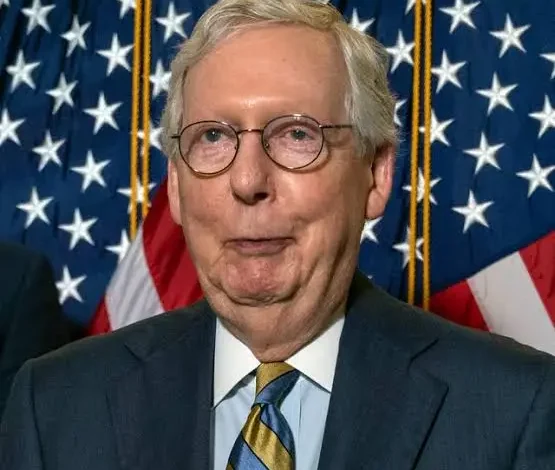
McConnell casts Iran as a blood-soaked enemy finally weakened, a regime whose reach has been diminished after years of spreading fear through militias, missiles, and intimidation. His argument is blunt: strength was required because weakness had failed. To him, the campaign is not reckless escalation, but the unavoidable price of confronting a hostile power that understood only pressure.
Johnson takes the argument further, grounding it not just in strategy but in theology. By invoking centuries-old Christian just war doctrine, he suggests that military force can, under certain conditions, become an instrument of mercy. If a strike prevents wider bloodshed, if it stops terror before it spreads, if it protects “millions of innocent people,” then force can be framed not as cruelty, but as reluctant justice.
That is the moral structure Republicans are trying to build around Trump’s actions: this was not aggression, they argue, but restraint in its hardest form. Not conquest, but prevention. Not bloodlust, but responsibility. In their version of events, the missiles were not a rejection of peace, but a brutal tool used to preserve it.
Pope Leo XIV, however, draws a hard line at the altar.
His warning that Christ “does not listen to the prayers of those who wage war” strikes directly at the theological foundation Johnson and Vance have leaned on. It challenges the idea that faith can be so easily placed behind military power, as if sacred language can cleanse the violence of geopolitical decisions. Where Republican leaders see righteous force, Leo sees spiritual danger. Where they speak of deterrence, he speaks of moral corruption.
That divide is what makes the moment so combustible. The argument is no longer only about Iran’s nuclear program, regional security, or America’s role in the Middle East. It has become a fight over who gets to claim the language of faith. Can war be blessed if its stated purpose is protection? Can military power be moral if it prevents something worse? Or does invoking Christ in defense of violence distort the very faith being invoked?
Trump’s furious counterattacks have only sharpened the split. Rather than softening the religious dispute, his response has turned it into another front in the broader political war. The Navy’s blockade of Iranian ports adds still more pressure, transforming theological disagreement into something tied to real ships, real weapons, and real consequences.
What began as a geopolitical confrontation has become a spiritual referendum. Republican leaders want the public to see the campaign as a painful but necessary act of defense. The pope’s warning asks whether necessity is too easily used as a mask for pride, vengeance, and power.
For Trump’s allies, faith and force can coexist if the cause is just and the threat is grave enough. For Leo, the danger lies in allowing faith to become a banner carried in front of the missiles, sanctifying decisions that should instead bring leaders to fear and trembling.
That is the question now hovering over the entire conflict: should religion steady the hand of power, or restrain it? Should it offer moral language to leaders who choose war, or stand in judgment over them when they do?
In the end, the fight over Iran may be remembered not only for what it did to the balance of power in the Middle East, but for what it revealed about the balance of power inside American conservatism itself. Between the pulpit and the war room, between doctrine and destruction, between the promise of peace and the machinery of force, a deeper conflict has emerged.
Whether faith should bless the missiles or stand in their way is no longer a private theological question. It has become the heart of the political battle itself.