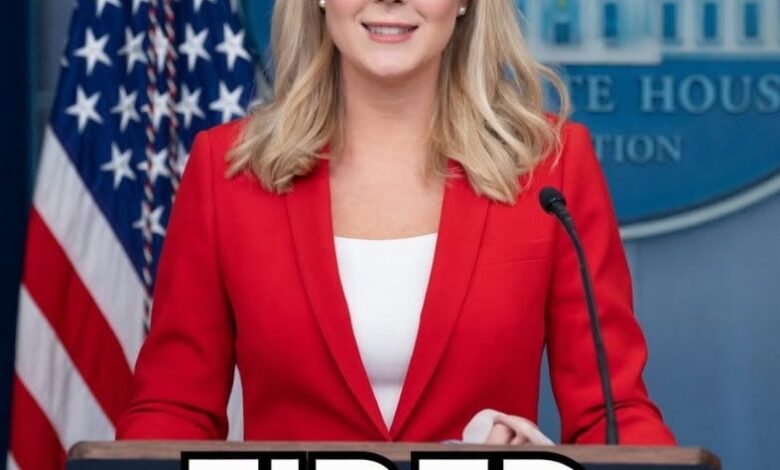
Cameron Hamilton walked out of the Department of Homeland Security as a terminated official, but not as a silent one. The former Navy SEAL and acting FEMA chief had just delivered a warning that cut directly against the direction of the administration. Speaking before Congress, he said that dismantling FEMA would not serve the best interests of the American people. It was a blunt statement at a moment when loyalty, speed, and ideological alignment seemed to matter as much as policy judgment.
Within a day, Trump’s deputies removed him and moved quickly to install a replacement seen as more aligned with the president’s vision. The message was unmistakable. The fight over FEMA was no longer an abstract debate about bureaucracy, efficiency, or federal spending. It had become a test of who controlled the future of disaster relief in America — career emergency managers, state governments, or a White House determined to remake the system on its own terms.
Hamilton’s removal gave the dispute a sharper edge because his warning came from inside the machinery of disaster response. He was not simply a critic on television or a partisan opponent looking for a headline. He had been leading the agency responsible for helping Americans recover from hurricanes, floods, fires, tornadoes, and other disasters that can destroy entire communities in hours. His argument was simple: whatever FEMA’s flaws, eliminating or gutting it could leave vulnerable people exposed at precisely the moment they need federal help most.
Trump and his allies, however, have framed the issue very differently. They have pointed to alleged abuses and failures inside FEMA, arguing that the agency has become bloated, politicized, and mismanaged. Supporters have highlighted controversies involving federal resources, including claims about luxury hotel stays for migrants and accusations that disaster victims under the Biden administration were neglected or treated unfairly. To them, FEMA is not a vital safety net in need of reform. It is a broken institution that has lost public trust and must be radically changed.
Trump has increasingly spoken as though FEMA’s future is open for negotiation. At times, he has suggested scrapping the agency entirely or shifting more responsibility onto the states. His pitch is built around promises of faster, cheaper, and more direct disaster response. He argues that governors and state officials understand local needs better than Washington bureaucrats and that federal disaster relief has become too slow, too expensive, and too tangled in politics. In his telling, a smaller or restructured FEMA would mean less red tape and more accountability.
But critics warn that the promise of simplicity may hide enormous risk. Disasters do not respect state budgets, political boundaries, or administrative theories. A major hurricane can overwhelm local governments in a single night. A wildfire can erase neighborhoods before state systems have time to react. Floods, earthquakes, and tornado outbreaks can require resources that only the federal government can mobilize quickly at scale. For poorer states, rural communities, and regions hit repeatedly by extreme weather, FEMA is often not a luxury. It is the backup system that keeps catastrophe from becoming abandonment.
That is why Hamilton’s warning has resonated beyond the walls of Congress. His dismissal raised a larger question about whether dissenting expertise is still welcome in a government preparing to overhaul one of the country’s most important emergency institutions. If the head of FEMA cannot publicly defend FEMA without being removed, critics ask, what happens to honest assessments inside the system? What happens when disaster planning becomes inseparable from political loyalty?
The stakes are not theoretical. Every year, Americans face hurricanes on the Gulf Coast, wildfires in the West, flooding in the Midwest and Northeast, tornadoes across the Plains and South, and heat emergencies that strain power grids and hospitals. When those disasters strike, people do not care whether help comes from a federal office, a state agency, or a local emergency team. They care whether rescue crews arrive, whether shelters open, whether roads are cleared, whether power is restored, whether insurance and aid move quickly, and whether their families can survive the first terrible days after everything familiar is gone.
Between Hamilton’s public warning and Trump’s vow to take command of a system he describes as broken, the country is now watching a high-stakes gamble unfold. One side argues that FEMA’s failures prove the agency must be cut down, replaced, or pushed aside. The other argues that weakening FEMA would leave Americans more dependent on uneven state capacity and political improvisation during the worst moments of their lives.
The answer may not come in a hearing room or a campaign speech. It may come during the next hurricane, the next wildfire, the next flood, or the next disaster that forces theory into reality. When the calls for help begin, when families are waiting on rooftops or evacuation roads, when local officials run out of resources and time, Americans may find out whose vision of disaster relief was right — and whose gamble left them standing alone.