Hollywood star retired from acting & now lives in a tiny town where people respect her privacy

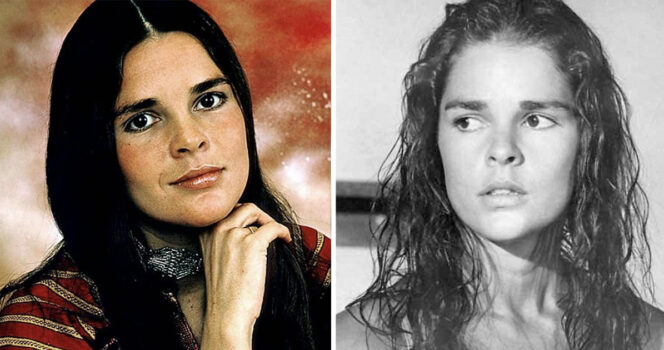
Born Elizabeth Alice MacGraw on April 1, 1939, in Pound Ridge, New York, Ali MacGraw entered the world surrounded by art, imagination, and struggle. Her family was deeply creative, but creativity did not protect them from hardship. Her mother, Frances, was an artist who had once worked at a school in Paris before settling in Greenwich Village. Her father, Richard MacGraw, was also an artist, a man of talent and intensity who carried emotional wounds from a painful childhood that never fully left him.


Richard had spent part of his youth in an orphanage and ran away at just 16 years old to work at sea before later studying art in Munich, Germany. His past followed him into adulthood like a shadow. Ali would later explain that her father was frightened, angry, and unable to forgive the parents who had given him up. Much of his life, she said, was spent suppressing the rage that covered all his hurt. That pain often spilled into the family home, shaping Ali’s early understanding of love, fear, and survival.
The family also struggled financially. Ali, her parents, and her brother Richard Jr. lived in a small house on a wilderness preserve alongside an elderly couple. It was a cramped and uncomfortable arrangement, with no real privacy and shared access to basic spaces like the kitchen and bathroom. Ali remembered it as horrible, a childhood marked not only by financial pressure but by the emotional tension that came from living so closely with others while trying to hold a fragile family together.
Her mother worked tirelessly to support them through commercial art projects, while her father found it difficult to sell his paintings. His frustrations often made home life unpredictable. Ali later recalled that on good days he could be wonderful, but on bad days he was terrifying. She witnessed him beat her brother badly, memories that stayed with her for the rest of her life. Those early years were not soft or easy, but they helped form the resilience, sensitivity, and independence that would later define her.
Despite the hardships, Ali inherited her parents’ artistic spirit. She earned a scholarship to Rosemary Hall and later attended Wellesley College in Massachusetts in 1956. Her intelligence, discipline, and natural elegance helped open doors, but nothing in her early life had taught her to expect comfort. She understood work. She understood pressure. And when she moved to New York City at 22, she carried both ambition and the ability to endure difficult rooms.


Her first major step into the world of style and media came at Harper’s Bazaar, where she worked as an assistant editor. Legendary fashion editor Diana Vreeland hired her, and the environment was intense, glamorous, and demanding. Ali later remembered the pace as relentless, recalling the kind of command that defined the office: “Girl! Get me a pencil!” It was not gentle training, but it sharpened her. She learned quickly, worked tirelessly, and began to stand out not only for her looks but for her extraordinary drive.
Six months later, photographer Melvin Sokolsky noticed her striking appearance and helped her move into styling, a position that brought better pay and a larger creative role. She stayed in that world for six years, earning a reputation for dedication that impressed those around her. Former art director Ruth Ansel once recalled that Ali would arrive at eight in the morning and still be working when others returned at one in the morning. That work ethic, forged through necessity and discipline, became one of the quiet engines of her success.
Eventually, Ali moved in front of the camera. She became a model, appeared on magazine covers around the world, and starred in television commercials. Her beauty was unmistakable, but there was also something more difficult to define: a cool intelligence, a guarded vulnerability, and a presence that suggested she had lived through more than glamour could hide. Hollywood soon noticed.
Before acting fully claimed her, she had even posed for surrealist artist Salvador Dalí. But one bizarre encounter reportedly pushed her toward a different path. After Dalí began sucking her toes during a sketch session, Ali decided acting might be the better choice. It was an odd, almost surreal turning point, but in a life filled with unexpected reinventions, it somehow fit.
Hollywood welcomed her with remarkable speed. After a small role in A Lovely Way to Die in 1968, she landed the lead in Goodbye, Columbus in 1969 and won a Golden Globe for Most Promising Newcomer. Then came the role that would define her career and place her permanently in film history.
When Ali received the script for Love Story, she immediately connected with it. She later admitted she cried twice while reading it. Producer Robert Evans met her at the Polo Lounge in Beverly Hills and instantly believed she was perfect for Jenny, the sharp, working-class college student at the center of the story. He also fell in love with her.
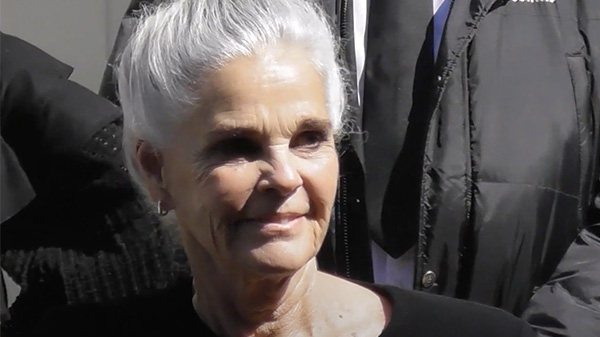

Released in 1970, Love Story became a worldwide sensation. Starring opposite Ryan O’Neal, Ali gave audiences a heroine who was intelligent, funny, vulnerable, and unforgettable. The film became the number one movie in America and one of the highest-grossing films of its era. Ali earned an Academy Award nomination and won another Golden Globe for Best Actress in a Motion Picture – Drama. Almost overnight, she became one of the most recognizable women in Hollywood.
At the same time, her romance with Robert Evans deepened. The couple married in 1969 and welcomed their son, Josh Evans, in 1971. From the outside, Ali seemed to have everything: fame, beauty, critical acclaim, a powerful husband, and a growing family. But Hollywood success did not guarantee personal peace.
Everything changed when Steve McQueen entered her life.
He visited her home to discuss starring with her in The Getaway, and Ali immediately felt overwhelmed by his presence. She later admitted that when she looked into his blue eyes, her knees started knocking. She became obsessed. Their chemistry was intense, and before long, Ali left Robert Evans to build a life with McQueen in Malibu.
At first, McQueen seemed to represent everything Hollywood was not. Ali saw him as original, principled, and separate from the polished machinery of the entertainment business. But the reality of their marriage became far more complicated. McQueen’s own troubled childhood had left him with deep wounds, jealousy, and a need for control that made life with him increasingly painful.
Ali later explained that he disliked her independence and expected her to stay home. She said she could not even attend art class because Steve expected his “old lady” to be there every night with dinner on the table. His jealousy and infidelity placed constant strain on the relationship. Ali would later say that Steve’s idea of “hot” was not her, and that other women were always around. Their marriage ended in divorce in 1978.
The years that followed were difficult. Several of Ali’s films failed at the box office, and she struggled with alcohol and substance abuse. She later spoke honestly about the damage drinking caused in her life, admitting that the worst things happened when she drank. Alcohol, she said, clouded her judgment and led her into choices she regretted.
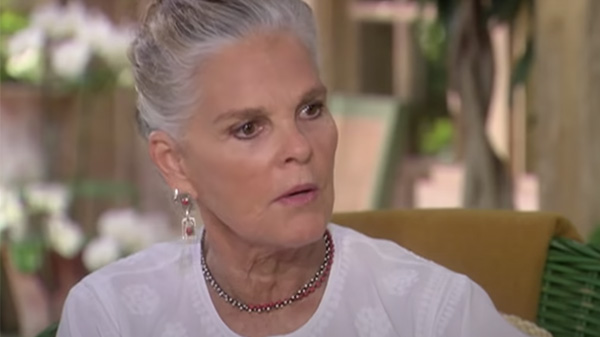
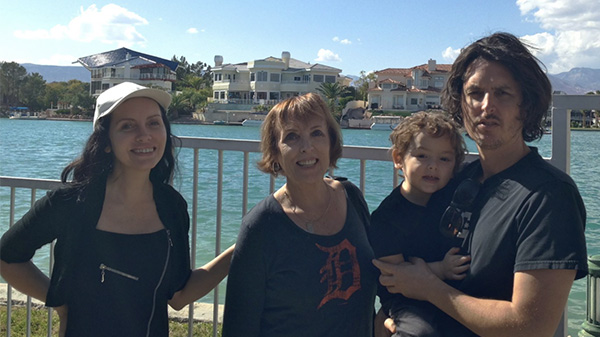
In 1986, determined to change her life, Ali checked herself into the Betty Ford Clinic. Her son Josh was only 15 at the time and witnessed the difficulty of that chapter. But treatment became a turning point. Ali emerged with greater clarity, determined to rebuild her life on healthier ground.
Then, in 1993, another loss reshaped her path. A wildfire destroyed her California home. For many people, such a loss might have felt like an ending. For Ali, it became a beginning. She chose to leave Los Angeles behind and moved to northern New Mexico, settling in the quiet village of Tesuque near Santa Fe.
There, she found a different kind of life. Her neighbors did not treat her as a Hollywood icon. They knew her through community involvement, volunteer work, and her dedication to causes she cared about, including the International Folk Art Market in Santa Fe. After decades of fame, heartbreak, reinvention, and survival, Ali found peace in a place that allowed her to be more than an image.
Although she largely stepped away from acting, she reunited with Ryan O’Neal in 2006 for a Broadway adaptation of the Danish film Festen. She also devoted time to animal rights causes and created successful yoga programs, continuing to explore wellness, creativity, and purpose outside the traditional Hollywood frame.
Even in her later years, Ali remained deeply curious and creatively alive. In 2019, she reflected that one of the lucky things about her age was that she remained open and curious. She explained that she did not have only one passion, but she knew she was unhappy when she was not doing something creative. That openness became one of the defining qualities of her later life.
Her son, Josh Evans, carried on the family’s artistic tradition. The son of Ali MacGraw and Robert Evans became both an actor and director, appearing in films such as Born on the Fourth of July before moving behind the camera. Josh once said he felt more comfortable on the side of the camera that did not show himself, explaining that directing and telling stories was something he would do for free, while acting felt more like a job.
Through all the changes in her life, Ali’s bond with Josh remained one of her greatest joys. She once called him her favorite human being on the planet and spoke warmly about his relationship, praising the friendship and respect at its center. After years of public romances, private pain, and personal reinvention, her love for her son became one of the steadier anchors in her life.
Ali MacGraw may have walked away from Hollywood decades ago, but she never truly disappeared. She simply chose a life that looked different from the one fame had once demanded of her. She traded red carpets for quiet mornings, celebrity for community, and constant attention for purpose, creativity, family, and peace.
Her story is not only about beauty, stardom, or one unforgettable film. It is about survival. It is about a woman shaped by a difficult childhood, lifted by extraordinary success, tested by painful relationships, and ultimately brave enough to step away from the world that once defined her. Sometimes the greatest transformation is not becoming famous. Sometimes it is knowing when to leave the spotlight behind and choose yourself.